Most organizations already know they should localize their learning. The question is no longer whether to do it. It’s how to do it at scale, without the process collapsing under its own weight.
In our latest webinar, Jon Withrington, Global Customer & Capability Education Manager at Keune Haircosmetics, and Derek Bruce, Chief Learning & Knowledge Officer at Easygenerator, joined moderator Ashling Moran to walk through what global learning actually looks like in practice, and how organizations can move from reactive translation cycles to a structured localization model.
🎥 Watch the session: Missed it live? Watch the full recording below.

Translation and localization are not the same thing
Most organizations start in the same place: content built centrally, in one language, finalized, and then sent for translation. It’s a logical sequence on paper. In practice, it creates problems.
Direct translation moves words from one language to another. Localization moves meaning. That means adapting examples, measurements, cultural references, and industry-specific language so that content makes sense to the person receiving it, in the context they are working in.
Derek has seen both sides of this. Early in his career at ABN Amro, a Dutch company with 17 international locations, the approach was straightforward: “It was very much, almost like the head office kind of determines the content and you just translate rather than localize, which are two very different things.”
The impact of that distinction goes beyond comprehension. When learners receive content that was clearly designed somewhere else, for someone else, it signals something. As Derek put it: “Everything is just a variance and not localized properly. It creates that kind of ‘we don’t really matter’ kind of piece.”
Localization, done well, is not just a learning quality issue. It’s a culture issue.
Building localization as a system
Jon has been scaling learning across 70 countries in 23 languages at Keune Haircosmetics. His honest assessment of how they got there: “To be totally honest with you, a lot of trial and error.”
In the early days, one or two people were building everything, piloting was limited, and the process was reactive. Now, Keune runs a structured roadmap tied to their marketing calendar. Content moves from the customer and capability team through pilot countries including North America, the UK, Spain, and Brazil, gets refined, and then rolls out globally through the digital team. Weekly standups and quarterly reviews keep the process on track.
Jon’s advice to anyone starting out is to resist the urge to move fast: “Don’t try and do everything at once. Really have a roadmap in place and think strategically about this.” Keune started with English, German, French, and Spanish, then added two or three more languages the following year.
Derek adds that structure is only half of the equation. The human side requires trust. L&D teams working from a central office can fall into a “we’re better than” mindset that makes collaboration with local teams harder than it needs to be. He also flagged the time issue: “One of the worst things is to go, here’s our 99.9% finished content. You’ve got a week to make any changes.”
Real iterations require real time. Building that into the design process from the start is what makes localization sustainable rather than stressful.
Where AI fits in
AI has changed what’s realistic for multilingual content, particularly for video.
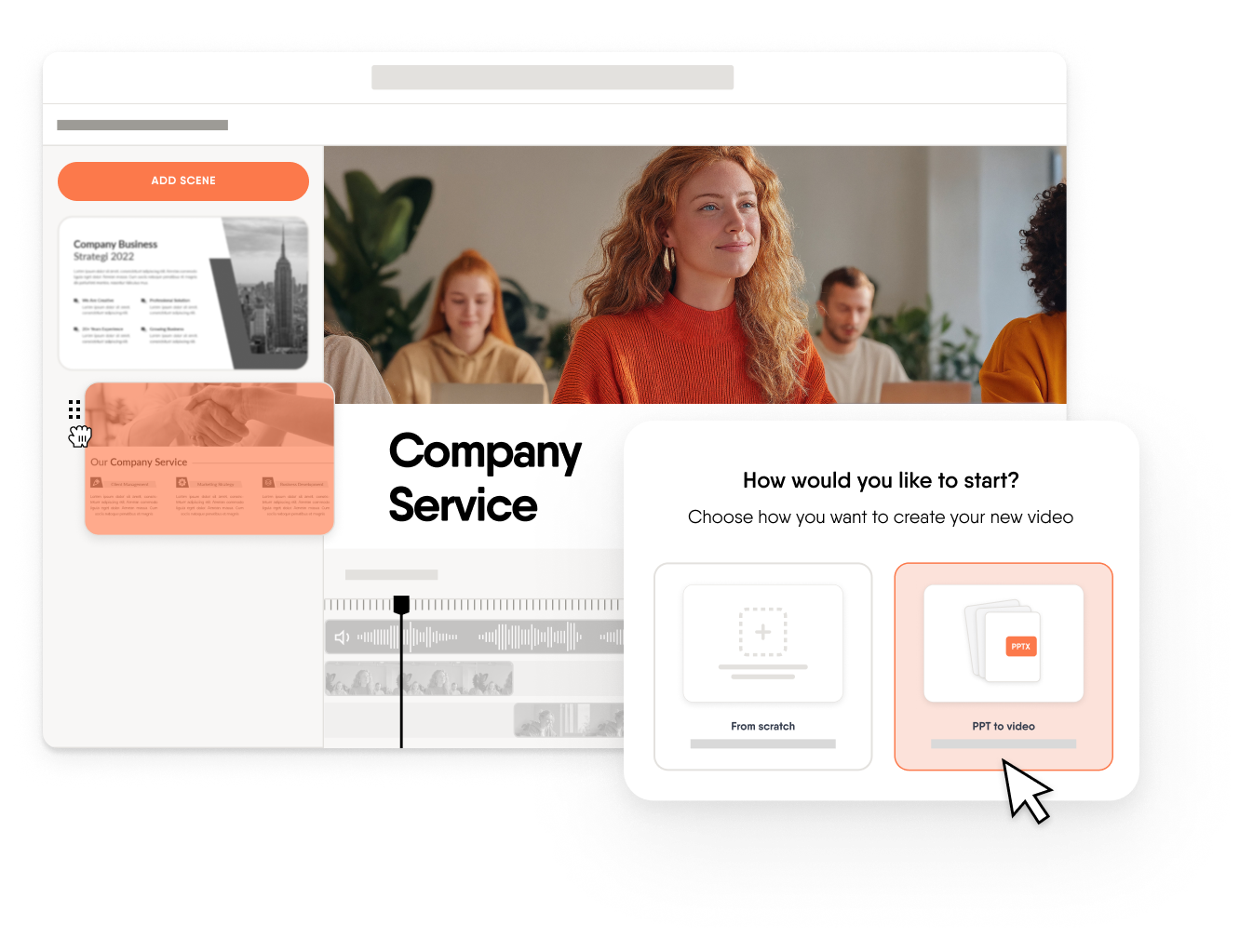
Before Keune adopted an AI video creation tool, producing video content cost between €20,000 and €30,000 per production cycle, with a lifespan of two to three years before updates were needed. The numbers look very different now. As Jon shared: “We spent in total €24,000, we produced over 800 interactive videos and it saved us around €800,000.”
The efficiency gains are real. But both Jon and Derek were clear that AI output is a starting point, not a finished product.
Jon put it directly: “Everything that you do with AI needs to have a human touch. Because at the end of the day, we are in the business of curating brain changes.” In Keune’s case, that matters especially. Their content includes industry-specific terminology that a translation tool alone won’t handle correctly. The review has to be done by someone who both understands the language and works within the industry.
Derek highlighted a less obvious benefit of AI in multilingual video: the ability to identify and correct bias quickly. When reviewing a multilingual video at a previous organization, his team noticed that certain voices were being used in ways that felt subtly negative. With AI, fixing it didn’t mean going back to a recording studio. “It just meant literally going, okay, that voiceover can now be this. And it was done, and that was within a couple of hours.”
The caution both speakers raised is around expectation management. Stakeholders who aren’t close to the process often assume AI delivers a finished result with minimal effort. Jon described the assumption as treating AI “like the Wand of Harry Potter, you know, you just whoop, and you get the result and it’s ready to go.” Getting buy-in requires showing the numbers and being upfront about what still takes time.
Derek’s summary was simple: “AI is a tool. It’s not the answer all the time. So use it wisely.”
What scalable global learning actually looks like
Scaling global learning requires the right ecosystem, not just the right tools. Derek framed it as needing three things at once: flexibility, speed, and consistency. Technology supports that, but so do people and processes.
One of the clearest points from the session was the importance of involving local teams from the start, not just at the review stage. The people closest to a specific region know what will land and what won’t. Derek gave the example of the word “banter,” which is commonly used in UK workplaces but carries a different meaning, or no meaning at all, in other regions. That kind of nuance only gets caught when the right people are involved early enough to do something about it.
For Jon, the future of localization at Keune is personalization: content engineered to what local teams actually expect to see, not just translated from a global template. Keune measures success by what happens offline after someone completes the training, whether they attend a seminar or purchase a product. That makes relevance non-negotiable.
As Derek put it, the stakes are straightforward: “If content can’t do that because it’s not right, because learners can’t understand it, we’ve failed our roles as well.”
How EasyTranslate fits into this
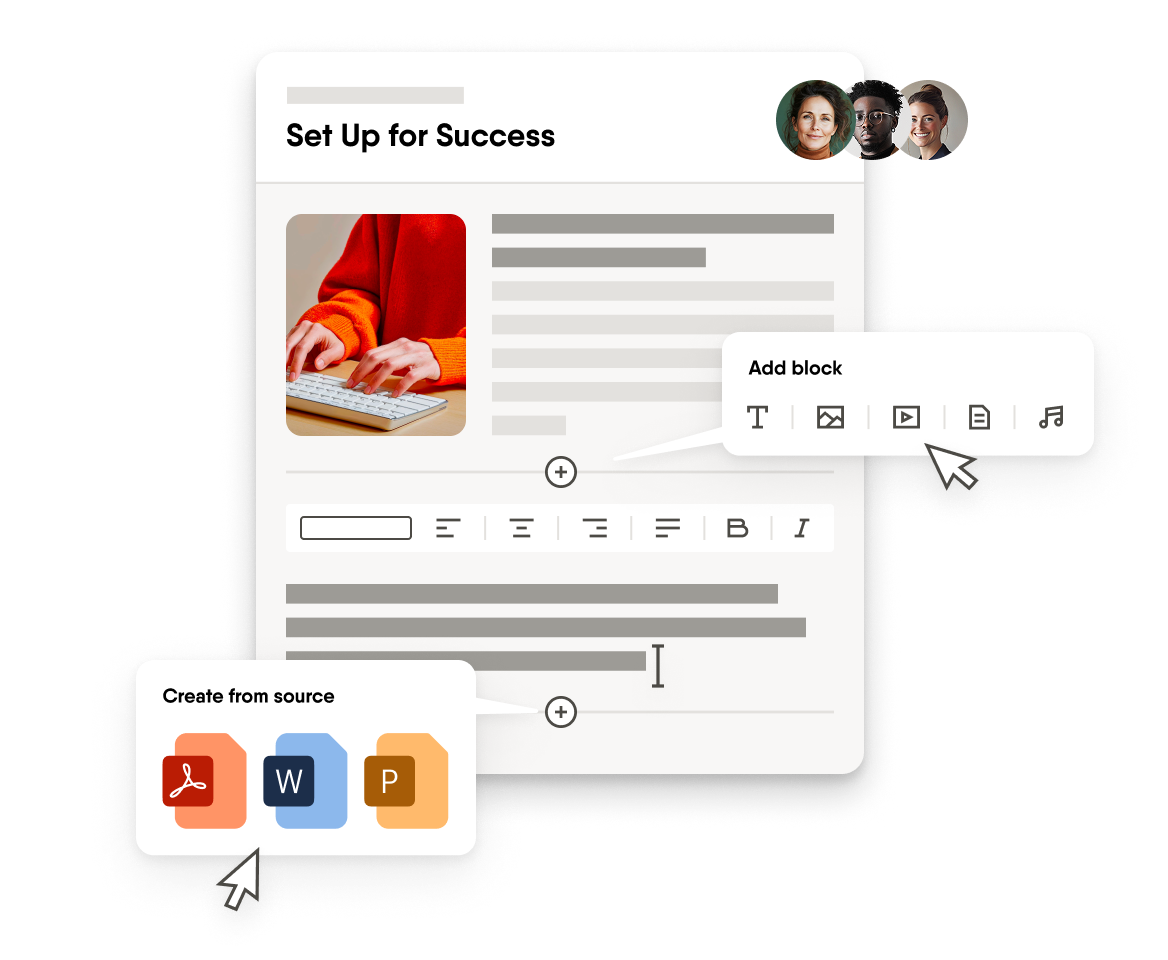
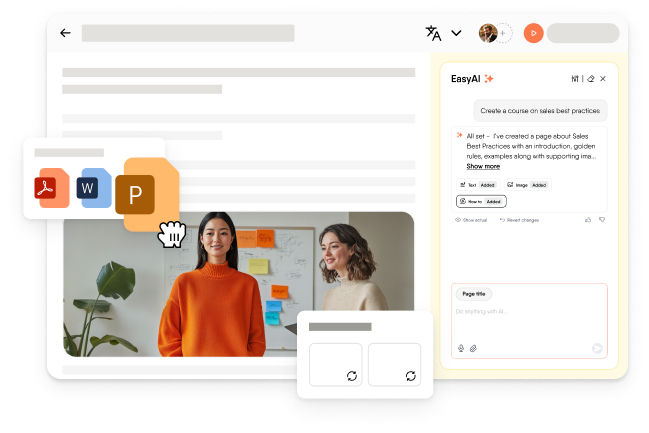
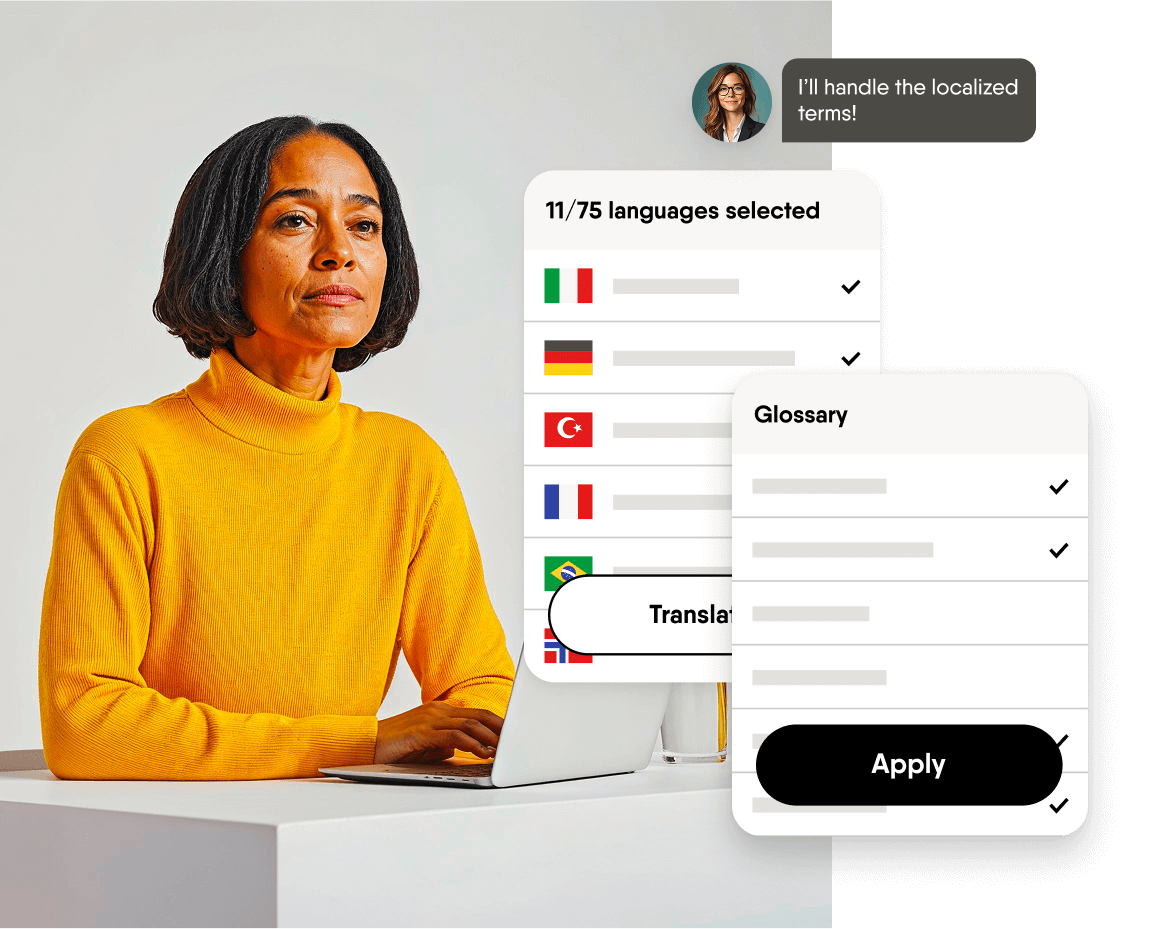
One of the practical challenges with localization is keeping translation from becoming a bottleneck. EasyTranslate is built into Easygenerator’s authoring workflow so translation happens where the content already lives. Reviewers come in to make targeted edits rather than rebuild from scratch, and when something needs updating, you push the change across languages without re-uploading or re-exporting.
If you want to see this in practice, Anna Pryczek, Customer Value Manager at Easygenerator, is hosting a live product session on how to create multilingual courses, manage updates, and translate content with EasyTranslate.
The bottom line
Localization is not a translation task bolted onto the end of a content project. It’s a design decision that shapes whether learners in different regions actually understand, apply, and benefit from what you build.
The organizations that scale it well treat it as a system with a clear roadmap, defined ownership, local involvement from day one, and tools that reduce manual effort without removing human judgment.
Jon’s closing words said it best: “Collaborate, communicate, and cultivate.”
👏 Huge thanks to Jon Withrington for joining this conversation.
Webinar transcript
Ashling: I should welcome you all to the call. Thank you all for joining. If this is the first time you are on one of these webinars with me, welcome. My name is Ashling, and I’m a Customer Value Manager here at Easygenerator. Today I have the pleasure of moderating this session. And I’m joined by two lovely guests who will introduce themselves in just a moment. Before we jump in, I do want to mention that the chat is here available to you. I know we’re all introducing ourselves and sharing where we’re from. You can use the chat to ask questions, share any insights, or even suggest topics that you’d like to see in future webinars as well. But without further ado, I am going to introduce the lovely gentlemen that I have with me today, Jon and Derek. Jon, you’re first on my screen. So would you like to begin by introducing yourself?
Jon: Of course. Well, good morning, good afternoon, good evening, wherever you are from the world. I see we have a very international audience here. My name is Jon. I am the Global Customer and Capability Education Manager for Keune Haircosmetics. We are a Dutch cosmetics brand which exports our products to over 95 countries internationally. So naturally, when I got invited to join on this webinar, there are a lot of really interesting things that I hope I can share with you today. And of course, it’s a core responsibility of my function and the function of my team. So fingers crossed, I share a bit of value with you in this session today.
Ashling: Thank you. We’re happy to have you. Derek, would you like to go next?
Derek: Yes, I’m Derek Bruce. I’m the Chief Learning Officer at Easygenerator, joined in January this year. And prior to that spent a lot of time in Amsterdam, in Europe, in the US, in different organizations such as Signify, ABN Amro, and DSM in the Netherlands, doing L&D and leadership roles. So the whole concept of localization is very big in terms of working in very global organizations. Happy to share some ideas, insights and thoughts on the topic as well.
Ashling: Yeah, I’m really excited for today’s conversation, especially because you both have had boots — or have boots — on the ground. So hopefully we can really cement the conversation in what actually happens. To set the scene a little bit before we dive in: it is important to highlight that today we are talking about localization and why it should be more than just an afterthought. Training is still very often designed centrally — usually in one language — and then adapted later. So localization in this case becomes something that happens at the end of a process rather than being built in from the start. And that can cause a few challenges. It makes it harder to keep content consistent across different languages. Updates can become slower. And in many cases, what gets translated doesn’t always fully reflect the local context — whether that’s things like examples, terminologies, measurements, or ways of working. At the same time, expectations are changing. Learners in this modern world are expecting content to be relevant to their work, to the context they’re working in, and increasingly the language that they prefer. Ultimately, the goal isn’t just to understand what we’re trying to learn — it’s also applying that new information and changing behavior. So conversations have really shifted. That’s why we’re here today. It’s no longer about whether organizations should be localizing learning — most already are or know that they should be. The question in the past few years has shifted to: how do we scale localization in a way that’s fast, consistent, but also sustainable? So that’s the idea, that’s why we’re here today and what this conversation will be about.
Ashling: As always you can pop things in the chat. But taking a look at the reality of global learning today — maybe Jon, you can kick us off with your experience at Keune. We’d love to know what does global learning actually look like in practice, and where does localization fit into that?
Jon: Yeah, great, thank you. So as a cosmetics brand, I want to go to the essence of what education actually is from our perspective and who we actually service. As a cosmetics brand, I always say this: our number one goal is to turn €20 products into a €200 service. So it means that education is much more than just sharing product information. Our audience are hair professionals and also consumers. And we also have internal stakeholders and internal teams that we collaborate with as well. So around five or six years ago, we launched our award-winning e-learning platform called the Keune Online Academy. There are a lot of things that we’ve learned along the way. The platform, just to give you some context, now services over 70 countries globally. The platform is available in 23 languages and we currently have 13,700 users with a projection of hitting around 15,000 by the end of this year. So as you can imagine, with the audience, with the products, with the different educational levels across the globe, it is not an easy feat. The reality at the moment: if we go down to our core user, which is a hair professional, these individuals really love learning and they learn off TikTok, they learn off YouTube, so they like short, snappy educational content. It’s got to be inspiring, it’s got to be creative and it has to get straight into the action. For us one of the real challenges that we faced was our bias, because we focus very heavily on the content, the translation of the messaging from the laboratory, from the marketing, etc. — really making sure that we get the essence of the product usage correct. This has really been quite a large learning curve for us, because it’s not only about making sure that the content we share is relevant and meets the needs of our customers, but also that it can be scalable across all of the countries that we service. So localization has two different faces for us, because we work very much with a blended learning principle. It’s really about what we offer online and what we offer offline and how they both complement each other. We see online learning really as a tool that works with our face-to-face education offering globally.
Ashling: Okay, it’s really interesting and it’s cool to see that you really are scaling and you’re in this process. I’m really interested to hear how that’s gone and what perhaps comes next. And then Derek, from your side, I know that you’ve had lots of experience with global enterprises. I’d be curious to know what role localization has played in your approach to learning.
Derek: Yeah, I mean I think one of the big things when I first started work, especially at ABN Amro, which is a Dutch-headquartered company with 17 locations outside — it wasn’t a big thing. It was very much almost like the head office determines the content and you just translate rather than localize, which are two very different things as well. And I think over the years I’ve seen that it’s much more about looking at, as a strategy, where you start when putting learning together — whether it’s face-to-face, online, blended, whatever — it’s about appreciating that all of the people in your organization across all different languages need to get the content in the right kind of way, the right language, the right style, so they can make an impact as well. So strategically we always said, when we design something, how is this going to land? Not just in the Netherlands, but in the US, in the UK, in France, in Germany. I think that focus is very hard, especially if your HQ is kind of dominant. But it’s very important to make sure whatever learning you do is impactful and also to make sure that people outside of your HQ location still feel part of the organization. Because if everything is just a variance and not localized properly, it creates that sense of: well, we don’t really matter. So strategically we always looked at whatever change or learning we were doing — it was always part of the design process as well.
Ashling: That makes sense. And I think, even understanding it here, it’s not just about making the content more relatable or more effective for learners, but also making them feel like part of the organization and the culture as well. Pretty interesting. So now that we’ve spoken a little bit about localization, I’d love to see how structuring localization as a system and on a project actually works. Jon, you mentioned just a few minutes ago that you’re scaling learning across 70 countries in 23 languages. What did it take for Keune to move on from those early challenges to a more structured localization model?
Jon: To be totally honest with you: a lot of trial and error. So in the beginning we received the brief — guys, we need to reach more people, education is moving towards e-learning and learning on the go. Of course this was really accelerated after the COVID period, so we really pulled everything forward to really accelerate this. And in the beginning we jumped straight into it. We knew what we needed, we knew what we wanted on the platform. But how you really spread that across all the territories — that was really quite a big challenge. So for us it was really about creating a system, a process, and taking our learnings and then building on those learnings. Back in the day, to give everyone context, the whole team were all trained hair professionals, then trained into the realm of education. So as you can imagine, we have extensive experience with offline learning, but online learning is a whole other ballgame altogether. How we have approached this is we divided up our department into teams. We have the content creators that work with the other stakeholders, and then we have the digital team. And they are really responsible for making sure that each project is run from point to point, working with our teams of translators all across the globe. It was not an easy process — of course you have a full onboarding program, timeline, project management, etc. But there was a lot of trial and error to get to that point. And coming back to the point of personalization, it also threw up quite a few challenges along the road as well.
Jon: It makes sense, and I love the honesty as well. We’re here to learn from each other. Absolutely. And to take what you’re doing, to launch what you’re doing and then reflect, take the lesson. If I add to this — if you said to me, can we roll the clock back five years and start again? Yes, I would really map this out. I have a dear colleague, Nancy, who has a super analytical mind and is really amazing at taking a jigsaw piece and creating a structure out of that. And I think it really starts with a really clear, honest, transparent discussion at the very beginning and really establishing a clear framework and system to ensure this is executed very well. So going in with the plan.
Ashling: Yeah. Derek, you also mentioned making content more relatable and part of the organization. So I’m curious — how does that change the way you’ve approached localization at scale?
Derek: I think it’s interesting because before I moved to EG I was working for a company in the UK called Tesco — which sells beans and food and stuff like that, you may have heard of them. And we did some work with around 3,000 leaders on how they could lead inclusively. There were 3,000 leaders in the UK, in Slovakia, Slovenia, Poland, India — basically five or six different locations. And one of the things we learned from the blueprint we had at Tesco was to involve those learners in the design process, especially if you’re looking at scale. Yes, we have a design team. We look at making sure the content is relevant and aimed towards making an impact and changing behavior. But also having people at the receiving end from different locales helps us understand what’s appropriate and what isn’t, and having them in a review stage. Certain things — and this is a really good example when you talk about inclusion — there’s a phrase in the UK called “banter,” B-A-N-T-E-R, which if you’re in the UK you know banter isn’t always appropriate. It has a connotation. That one word means nothing to anybody outside the UK, but it was within the context of our learning. By having the different locales involved in the review and design process, it was evident that that just doesn’t make sense. How do you get a message across without using that word, but still make sense? Actually having the learners involved, having that co-creative mindset, and having the review process meant that when things were launched — even if the languages were different — the nuances were still captured. And I think that’s the only way, especially in a global company, where you can truly be inclusive: by including people who are going to receive the content at the end as well.
Ashling: It makes a lot of sense, especially when it comes to something like translations — direct translation doesn’t always work, doesn’t always exist. You’re missing those pieces. But that’s really interesting. And then Jon, I’m curious to dig into the structure that you’ve landed on as well. You mentioned that if you could go back you might start differently, but you have come a long way and you have a process in place. So I’d be really curious to understand what that looks like day to day. You mentioned split work between content creators and digital teams.
Jon: Yeah, indeed. So of course in the beginning you start with a blank slate, right? This is the platform we’ve invested in, let’s go. So of course we get going and then what ends up happening is you maybe have one or two people developing everything — and this is really what happened at the beginning. And then sometimes you have a little bit of bias involved in this, so piloting or testing is not quite that robust. If we look at where we are now, it’s a completely different setup. Where do we always begin? We always begin, just like with a marketing calendar, by setting up a roadmap for the whole year. As a cosmetics brand, everything we do and all our priorities are dictated by new products, updates, or whatever needs to come. So we have a roadmap developed within that and it always starts with the content team, or the customer and capability team. We will create all of the content necessary for the modules. This is then tested with select countries — we would take North America, the United Kingdom, Spain, Brazil — so we would test with some pilot countries. We will then refine that content, and this is done in conjunction with the digital team. Once this is done, it’s effectively deployed out through the digital team to all the territories, who will then make the necessary adjustments. And the digital team will be managing that timeline, and we in the background will be adjusting where necessary to ensure it’s really where it should be. So this is more or less how we work as a collective.
Jon: Sorry, just to add to this — it’s a bit broad. It’s not only about doing a kickoff meeting and deploying. Of course we have regular meetings: once a week we have a stand-up where we really dive into any of the challenges we are facing, any blockages within that process. And every quarter we also do the cycle review. So we are always in constant communication. And I think to sum this all up: it’s really about working as a collective, communicating as a collective, and cultivating a culture where everyone is fighting for the same team and the same goal. Making sure that the roles within the departments and the teams are super clear. And something that our digital team does extremely well is ensuring that the teams globally — our education teams and translation teams — have all the tools and support that they need, so they are set up for success. Typically the digital team will meet the translators at least once per week to keep the project on track. As you can imagine with the number of languages we’re working with, it can happen that sometimes things drop off the radar.
Ashling: What’s interesting there is perhaps there are some differences, and it seems like you have a well-oiled machine with lots of collaboration to make things happen. But then both yourself, Jon, and you, Derek, mentioned getting the locations involved — rolling out to a few countries and taking what you learn before deploying it to all 23. Derek, I’d be really curious to know what needs to be in place to make the contribution from local teams and subject-matter experts actually work in practice.
Derek: I think there are a number of techniques — almost like technical but also human aspects. The human aspect from an L&D team is trust: that relationship you have with your colleagues in other locales. Going back to Jon’s point, you’re all fighting for the same purpose. And I think sometimes L&D, especially if you’re centralized in a head office, sometimes has a “we’re better than” mindset. I’ve seen it — might have had it. So I think it’s important to have that trust that whatever you get from your colleagues in other locales is actually really valuable and actually does make sure that their people learn as well. The other thing in terms of structure is to make sure there are mechanisms for iterations of the learning, and it’s about time. One of the worst things is to go: here’s our 99.9% finished content, you’ve got a week to make any changes. And they’re like, well, hang on a second, this doesn’t make sense. So in terms of what needs to be in place within a design process, have that space for iterations, reviews, content contact with other people — business partners, learning designers, people who aren’t in the L&D team — just to make sure it makes sense. And the other thing that needs to be in place is time to run those demo meetings as well, where you run people through things. You mentioned it as well, Jon. When I did the work at Tesco with a partner and with the different locations, there were probably three or four different pilot sessions run face-to-face and virtual, in different places, with different people attending, just to make sure that once the final product was done, it made sense to everybody. And allowing that time to do that is one of the things which is easy to forget: it’s not just the time to review, it’s the time to make the changes and then review again. That needs to be built in, as well as trust that the people telling you the stuff are actually going to make it much better.
Jon: If I may, I just want to quickly add to this, because this is a very good point. Within that process: regularly checking and aligning. Because as a cosmetics brand, we work with facts. If we develop a module and we say a product is used in X, Y, and Z way, of course those rules are checked with regulatory, legal, etc. And we are very mindful that that is consistent globally, and sometimes that can be a little bit of a challenge. Trust is a huge, huge part of this process. It really is.
Ashling: Yeah. And I guess I’m a bit curious there as well — how do you balance that consistency with also the localization piece? So the need to make changes while also keeping these facts in place.
Jon: Well, this can really be a challenge, and of course we had to ask ourselves: how do we balance this? How we see it is that the Keune Online Academy — through our e-learning — we’re able to use this as a solution scaling tool. So with one voice and of course we make it as interactive as possible, taking the feedback from the different markets. But actually most of the localization actually takes place on the ground in our face-to-face training. So this is why we see the Keune Online Academy as a blended learning tool in collaboration with our offline training. You can only personalize to a point as a cosmetics brand. So then personalization — the face of personalization — is in terms of the variety of content that we’re using on the platform to make sure that we’re really hitting the needs of the hair professional.
Ashling: Does this make sense? Yeah, it makes a lot of sense and I think it’s also a good practical example. I will say for those of you following along in the chat: if localization is something that you’re currently working on or trying to scale, today we are very much talking about the strategy, the challenges, the wins. But we will also be hosting a webinar where we will focus more on the practicalities of how to make that work in Easygenerator, including EasyTranslate, if you’re interested in joining that as well. We’re going to drop a link in the chat, so you’re welcome to join that conversation too in case you’re eager to learn more on that point. But before I take us too far off course, Jon, you’ve mentioned something that I want to follow up on. You were describing a very structured process between the content team and the digital team. And I’m really curious — how does AI, or if AI, plays a role and makes a difference in that workflow?
Jon: It plays a huge difference. I think the biggest difference, or the most impactful thing with AI, is well, it’s cost of course, and time. For me, time is the biggest thing. And this is because, again, if I look at our audience — hair professionals — they are super visual and super kinaesthetic. They love to get into the action as quickly as possible. So we know that globally, short, snappy videos are the way to really hit the needs of our audience. If you blend that with gamification and some short activities, this really wins them over. Now, before AI, you might produce videos and spend maybe €20,000 to €30,000 on them. You’d get maybe two or three years out of them and then you’d have to redo them, because maybe you’ve had a rebrand or product information has changed. We partnered with an AI video creation tool last year, and when I ran the numbers, I almost fell off my chair — because we spent in total €24,000, we produced over 800 interactive videos, and it saved us around €800,000 as a brand. It’s quite impressive. And the amazing thing about it is, again, you can localize, you can adjust, you can translate it. It’s fabulous. One of the biggest challenges though we found with AI was finding the right tools, the tools that all complement each other — because of course Easygenerator has fantastic tools, and we pilot everything upfront to see what really meets our needs as a brand. So really researching and finding the appropriate tools for your specific needs is super important. However, the other thing is we also went through a phase of being over-reliant on AI, and that also can be a danger. So I think now we’ve got to the sweet spot. But yes, I have to say AI is a force of good when used in the best way.
Ashling: Finding its place, finding the sweet spot — within the ecosystem, of course, where it can act as a help for sure. And Derek, what about you? Have you found that things change once AI becomes part of the workflow?
Derek: I think it does. For me there are kind of two or three things that it makes much easier — with a caveat that you still need to have people to make sure and check what’s going on. But in terms of a consistency of approach, it meant that we could use the same model for different languages ongoing. So we weren’t changing stuff, we weren’t changing vendors and providers. I think one of the things which is really powerful is the speed and also the ability to update. As Jon mentioned, you’re not updating content every single time, because it allows you to make tweaks very, very quickly and easily if things aren’t right. One of the interesting things — which we had as a benefit that we never realized — is we did an amazing video for another organization I worked for, and it was multilingual. We realized that some of the voices we’d used, when we watched the semi-final version, were showing individual biases — like positive connotations on certain voices, negative on others. And the AI meant we could just tweak it really easily. It didn’t mean going back to a recording studio. It just meant: okay, that voiceover can now be this, that one can be this. And it was done within a couple of hours. And I think that flexibility is really, really good. But I still think the thing which even being part of a workflow still requires is us as professionals having that final guardrail to make sure that it sounds right, feels right, sounds authentic, comes across the right way. Because for some reason we as humans can still kind of feel if a voice is AI, if the translation is AI, if it’s not quite nuanced, it doesn’t feel genuine. And I think that’s the thing we need to be aware of — not just for translation of the content, but if it’s being used at the output end of learning as well, just in terms of how it comes across.
Ashling: Yeah, that is something that we see quite commonly across customers, especially those using the translation piece or EasyTranslate. They’ll translate the courses — it’s maybe 90% of the way there — but then they’ll do a few tweaks to the language to make it sound more natural, or sometimes adding in a colloquialism or a branded term that the tool might miss. Okay, so AI is definitely helpful, but we have to be wise about how we’re doing it and not lose the human. I think I’ve gathered that correctly.
Derek: That’s where we landed.
Ashling: Yeah. So Jon, you did mention the over-reliance on AI. I’m curious how you decided where AI adds value and where you still need that human touch.
Jon: Yeah, so I mean, one of the great things about AI is of course the efficiency. But I think the challenge can be that every time you ask AI to do something, it turns out a beautiful response. And every time you think: oh, this is amazing, I can’t live without this. But then when you start to scratch beneath the surface and take a closer look, I think everything that you do with AI needs to have a human touch. Because at the end of the day we are in the business of curating brain changes, and you do that through a human touch. Especially with our audience — hair professionals — we are communicating. And I think you tapped into the translation tool within Easygenerator — it’s a remarkable tool. However, within our industry, we have a lot of industry-specific lingo. So you would never just use a translation tool and leave it as is. It always has to be checked by a professional — and not even by just any translator. It really needs to be someone who can translate but who is also within the industry, so they can really curate it to the needs of the audience. So bottom line: all AI tools add value to some extent. But it’s about looking at what the pros and the cons are, depending on your needs. And there always has to be a human element. If I look at the video tool, for example, we went to three or four different agencies, and it was a really complex project — is it compliant with data regulations, how does this work with the buyout, how does it work with the library of voices? Because even the voices can leave an impression. There are many different things, and if you don’t pilot, if you don’t get perspectives from people who are going to be working with it and people who will be using or observing it, it can really cloud your judgment. And it can be a very expensive mistake if you don’t get this right.
Ashling: Yeah, definitely. It makes a lot of sense, especially what you said about piloting and doing the research. I know as well that if you are launching any AI tools, always making sure that you have the human check in place. And for things like translation, building out your glossaries or seeing what’s available to you to make the process as smooth as possible in the first instance — so when a human comes in, they hopefully have to do less cleanup, let’s say. Exactly. And it looks like you’ve really built out that AI framework and how you use AI. And I’m curious, Jon, if that’s having any impact on the expectations of stakeholders.
Jon: That’s a great question. So the challenge can also be that the beauty of AI is that you can do everything much quicker. However, if we’re talking in the environment of stakeholders — even within the realm of education, I think unless you’re really in it, sometimes people think that AI is really like the Wand of Harry Potter: you just go whoosh and you get the result and it’s ready to go. And I think if we’re talking about stakeholders, first you need to justify the cost. Okay, what am I going to get in return? What’s my return on investment? And then secondly, setting the expectations for them — okay, it is a great tool, it does this, but we also really need time to add that human touch, to do those changes or to adjust it so it is following our brand voice or our glossary. And I have to say, if we’re talking about the video creation tool — I would say 50% of the challenge I had was really getting buy-in from stakeholders, both for the investment and for managing the expectations of what it can do. Even something as simple as: how real should the avatar look, should it be really obvious as an avatar, should it be super lifelike? All of these things were quite a challenge with AI, and it is something that I underestimated when I started exploring this world.
Ashling: Yeah, so many things that we can put on there. Derek, I’m really curious as well — from your experience, have you also seen expectations from the business that AI makes things faster and more flexible?
Derek: I think the expectations have been kind of interesting. There’s been, as Jon mentioned, the expectation that there’s got to be an ROI, a return on engagement, of what you do and how you do it. An expectation that it should be quicker to market because you’re now not outsourcing — it’s being done in-house. But I think the balance between that is also the expectation that it should still feel human and should still feel right. And I think that is unrealistic in some aspects. Jon’s point around the avatars, the voices, the look and feel — if you get a voice or somebody who does translation with a real voice, there are nuances which people, as mentioned before, do pick up. So I think the expectations have shifted, but not always realistic ones. And I think one of the things collectively with AI is we do have expectations that it can do everything, and it can’t. We get expectations that the L&D function can do more with less — also unrealistic, because if you don’t have those guardrails, it doesn’t work as well. So one of the things I found when we started using AI was a big need to manage expectations better and have the conversations with people outside of L&D — with the finance team, with the IT team — in terms of can it just be plug-and-play versus what integrations are needed, where is it stored, and how does that make sure it’s not breaking any data privacy requirements, for example. So outside of the product itself, there are also lots of conversations around the integration of whatever platform, process, or software you use and how that works — which is coming, and which we as L&D professionals need to be aware of. It’s not just the outcome, it’s stuff around it which is important to manage expectations on as well.
Ashling: Yeah. I think that can get overlooked in the shuffle — AI is time-saving, it can do all these great things, but also to even get it into people’s hands as a tool, some work has to be done on the back end too, with IT. I also think education, perhaps, when it comes to AI is also important — like what it can do, how you can use it, and what it can’t do. That’s the thing as well: certain things it just can’t do because it’s just not that sophisticated.
Derek: And I think, I hate to admit this, but the phrase “copilot” — which is another brand obviously — is probably the best definition of AI. It’s not going to do it all. It is actually your copilot. It helps you do stuff. It doesn’t do the stuff for you. And for me it’s always going to be human first, AI second, in whatever we do.
Jon: I would love to just add to this actually, because I think back to the beginning — I remember us creating a pilot video, and it really did get to the point in the feedback rounds with stakeholders where they were saying: I want the avatar to move like this, I need to see more of this, oh, I don’t like how the avatar says this. And I got to the point where I really had to sit down with this individual and say: with respect, it’s now taking so long to try and do these impossible things. Maybe it’s actually easier to hire a production company and just do this externally, which actually defeats the whole point of using AI. And that really is a huge challenge.
Ashling: I want to lean back into what you were just saying, Derek, about managing expectations. When we’re talking about getting the project going, this was the hardest thing: really managing the expectations. And if I think about it, people are very visual — show them a beautiful video, tell them what they need to invest, tell them what they can get in return. As long as you have the numbers, everyone’s happy.
Jon: Yeah. So would that be advice for anyone tuning in today? Show them the numbers.
Ashling: Okay, well yeah — you’ve heard it, because I’m sure that will come up. We will be having a bit of a Q&A in a few minutes, so if there are any burning questions, feel free to pop them into the chat. But also if you have any insights, examples, or takeaways that you’d like to share for us to learn collectively, you can pop them in there too. In the meantime, I’d kind of like to take a few minutes to look at what scaling globally will look like moving forward. Derek, I know that we’ve touched on this, but based on everything we’ve discussed today, what do you think scalable global learning looks like in practice moving forward?
Derek: I think there are a couple of things in terms of how it works and how it looks. One is having the right ecosystem support working in a global way — in terms of technology, but also in terms of processes and people. Because you need to be flexible, you need to be quick, you need to be consistent. And the ecosystem underneath that — technology, people, processes — is what allows the scaling to happen. I mentioned upfront the importance of people in different locales, and I think that is essential going forward: them knowing the nuances, what’s going to work, knowing the languages, how things have been translated. And if you think about, as you mentioned, TikTok and all the other different social platforms — everybody who goes onto one of those does it in their mother tongue. They don’t do it in English, they do it in the tongue they want to use. And I think people want to have stuff in their own mother tongue. So having the SMEs involved at the point of starting things is really important. And the last thing is relevance. If you just translate something using a box-standard translation machine that does A to B, and “banter” becomes a different word in French, German, and Spanish, it doesn’t have any value. And all of our roles in L&D and leadership development — it’s around making sure that whatever people are touched by from the stuff we produce, it has a positive impact. It changes behavior and it makes them do things better. If it can’t do that because it’s not right or they can’t understand it, we’ve failed our roles as well.
Ashling: So if I’ve gathered this correctly: making sure that we have the ecosystem in place — which is really important. Getting individuals in the local locales involved, and not just at the end but also at the beginning. And if you take a look at the bigger picture, keeping in mind that whatever we create needs to be effective in driving change for the individuals taking the training, and hence the company as well. Yeah, that makes sense. And then yeah, I’d be curious Jon, based on your experience so far, how do you see localization evolving at Keune in the next few years?
Jon: Yeah. So for us I think personalization is going to become much more of a key topic area and a tailored pathway. At the moment within our own e-learning platform we have specific pathways which are developed from a global level. But I think bringing in different territories earlier into that process will mean that the content is much more engineered to what the local teams are expecting to see. And it’s also making sure that the variety of content that we have on the platform keeps them engaged and is relevant to the local audience. Because as you can imagine, one point of truth always remains the same: the product information. And our job is: how do we measure success? As a cosmetics brand we measure success by activity that happens offline afterwards — driving our customers to offline Academy seminars and of course purchasing more products and staying within the cycle of the brand. So there’s also the commerciality that sits within this. And how we see this going forward: personalization based on the needs territorially within the territory, but even for the user. I think that will be the pathway that we are taking.
Ashling: That makes sense — but again, it makes sense because you have a clear roadmap of what you’re trying to achieve, a way to measure that, and you’re taking steps in that direction. Yeah, indeed. And I think as you can imagine, we’re in 95 countries worldwide, so we are looking to expand the platform to more territories and more languages, which is a great task. So I do like this. And then at the same time we’re also looking to enhance and improve that, following the marketing timeline. So as you can imagine, there’s a lot of balls in the air. But yeah, the ultimate goal — personalization will be the key. This is absolutely our future.
Jon: It’s definitely an exciting time. And you said something very interesting there, which I think will segue us nicely to the question and answer portion of today’s call.
Ashling: I saw a question come in from Sabrina about how many languages should they start with when it comes to scaling localization. And Jon, now that you’re touching on this and expanding the learning, I’d be curious if you could provide some insights.
Jon: Yeah, well, this is a great question — one I wasn’t so involved with from the very beginning. What I would say is: pick maybe three or four key languages, and think strategically about this. Don’t pick ten or twelve languages. Develop a process to introduce this gradually. I know in the beginning we started off with English, German, French, and Spanish — three or four languages — and then the year after we introduced another two or three more. So don’t try to do everything at once. Have a roadmap in place and think strategically about this.
Ashling: I think that’s quite a common approach from working with clients. Typically what they’ll do is start with a few core languages — whatever languages have either the largest audience or the most influential reach. They’ll start there and do a few practice runs to really figure out what the flow looks like, what the review process looks like, how much information they need to give to the translators or whoever’s reviewing the translations. And then once they have that, they can start to scale.
Jon: Yeah, indeed. I really think: think strategically. That is really our number one learning. Have a clear roadmap. The better you plan and map this out, the stronger the deployment will be.
Derek: Yeah, and that makes perfect sense, especially because it’s always easiest to want to do too much too soon and then realize you’ve got everything wrong. So it’s definitely about working out where the biggest headcount is, working out where the biggest impact is, involving those people in it as well. And once you’ve got that working, then you can start evolving it. And involving the locals — maybe if you also have some projects that are getting some eyes on them, it can be nice to use those as the test.
Ashling: I see that there’s another question actually from Sabrina, about how long did it take to build that structured localization process at Keune? And they find that localization costs are quite high due to using external providers.
Jon: Yeah, this is a great point. Let’s start with the duration. As I said, when we first started with this project, we really jumped directly into it. And I would say the first year we actually did the pilot with our subsidiaries, and of course with our subsidiaries we have more space. We were working internally with the team. I would say that the localization process, from really getting that first language up and running, was anywhere between six to eight months — really going from point to point. In terms of the cost — well, this is a really good point. With our model we work with subsidiaries and distributors globally. So we have an agreement already in place where we manage and are responsible for everything centrally. But when it comes to the localization, this is done on the account of the country that is doing the localizations, and we have agreements in place for this. So we develop everything centrally and then work along from that point.
Ashling: It makes sense when you lay it out. That’s something that’s structured and evolved over time.
Derek: I do want to add one thing though — about the cost — because this was also a very costly mistake. What did a lot of people do? Sorry, I have to laugh because it’s… So what they did was they sent everything to a translation agency. Oh yeah, all the resources, etc. And what happened? When the translations came back, those translations lacked the precision because, of course, it’s the lingo — those local nuggets. So for us the key was also working with our local education teams. In each country we have an assigned person from the education department who is doing the translation — sometimes if their competency is high enough, or in conjunction with a translator — but they make sure that everything is adjusted and adapted as needed to the local context.
Derek: And the thing is, we had the same at ABN Amro: the same protocol where the bureau comes back, and then someone locally — whether in Brazil, the US, France, Germany — checks it. And you’re thinking: so we’re duplicating the work as well. How do we also make that smarter? Because it’s translated and then double-checked again. I didn’t really think AI helped to reduce the time to check, but there was a lot of duplication of human effort from the bureaus. Plus the fact you’re paying them to translate it as well. So yeah, we had that challenge as well.
Ashling: That’s interesting. And I know we’re speaking about external translators, which of course have their place. If it is something that you’re looking to scale and you are using Easygenerator, the translation tool might be helpful — only because you can have everything translated in one go and then have somebody come in and check it for you. So it becomes a tool that’s actually more cost-effective as you use it. Translation becomes cheaper, so it’s something to consider. I also see Callum here in the chat as well, and I think Derek, you might be able to help out. How do you train your internal teams or subject-matter experts to contribute to localization content?
Derek: I’m trying to think about this in the context of the content being appropriate for learning. I think making sure the content, even if it’s localized, is still appropriate goes back to the partnership and working with subject-matter experts and original content. So a learning team, a design team, with partners. You’ve got designing for learning. So it’s very much around explaining the nuances: the aim of what the learning is about, what the outcome should be. If I think, for example, of an example I had with SMEs in Eastern Europe — my partner and I spent probably half a day just talking through what this training was going to do, how it needed to do it, how it needed to land — to make sure they understood not the language bit, but actually the nuance of what it meant to do, so they could then contextualize what it needed to do from their side. And an interesting thing from having those really rich conversations was that culturally, some things which we thought would work globally, wouldn’t work in their region. So we tweaked it accordingly. I think “train” might not even be the right word — in the sense of the design outcome. Maybe it’s “collaborate with” or “work with” — to get localized content. Because “train” might imply that we get them to do what we want anyway, when in fact sometimes that may not work. I don’t know if that answers the question at all, Callum, but for me it’s still a collaboration. It’s still co-creating. It’s still making sure I understand what you’re trying to do and then making sure that it’s localized and personalized to that region or locale, and it hits the mark.
Jon: Don’t you want to add anything to that? No, I don’t think so. I think in the grand scheme of things, it’s really all about collaboration. If I could sum everything up, it’s really about collaboration and communication. And I think sometimes in education we can kind of be a little bit rigid in our thinking, you know. And sometimes it’s those little mind snacks that really unlock different approaches and different perspectives.
Ashling: Yeah, collaboration is a great word. I would have probably used enablement. But I think I’ll move forward with collaboration. From working with a lot of different organizations, different sizes — from really small, like under 20 people, to really big global enterprises — what I’ve noticed as well is that those conversations that you mentioned, Derek, are really important. But also having some resources that those SMEs can rely on. So it could be something like a very quick checklist: make sure our content is branded, does the language make sense, do the examples make sense, do the measurements used make sense? You can make a much more detailed checklist. And if you’re working with your customer success manager at Easygenerator, they have some examples that you can rely on as well. But also providing that kind of insight or resource that somebody can refer back to when they are doing the task can be really beneficial.
Derek: And I think just to add — I didn’t mention it because I think when I worked before we had that kind of as a blueprint anyway. Those things in terms of look and feel, tone of voice, how it should come across — they were all kind of defaults. But it’s completely right to highlight that it’s not just the conversations, it’s also the guardrails to make sure that what they do actually also makes sense as well. So yeah, a lot of things that you can do, and I think there’s a lot of cool points that I’m also going to take away from today and reflect on.
Ashling: I do see an insight from Florian as well that I thought was interesting — about the workflow of publishing and LMS platforms like SAP SuccessFactors. Any good practices around deployments, updates, maintenance? Do you have any suggestions about how to manage training that’s localized but then also deploying that to learners?
Derek: Big question. My two cents would be: have good governance of what’s going where, understanding who owns the content as well. And having that link between ownership and updates — having a process where if you think something needs updating, the individual who owns it is being made aware of it. And then obviously it only goes to relevant people. I think that’s one of the nice things about some of the LMSs and LXPs: you can make sure it goes to the right people and actually see the impact as well. That’s top of my head.
Ashling: That’s a good example. I’m not sure, Jon, if you have anything to jump in with. But if you’re talking technically, there are some options when it comes to e-learning in Easygenerator more specifically. So if possible, use an integration. But if you are publishing, you can use something like dynamic SCORM so you don’t have to re-upload content every time — let’s say somebody notices a word that needs changing. So that’s perhaps something to consider on the maintenance side of things.
Ashling: Okay, I think that covers the questions I’m trying to get through. I know Rumana asked a question about smaller organizations where resources are limited and job roles are more rigid, which can make collaboration difficult. Is there any practical starting point that we would recommend? Let’s make that our last question for today.
Derek: One thing I would say is: if it’s a smaller company and it’s not someone’s role but you still need their expertise, try and work out how to make sure they’re recognized and engaged with being involved. I think lots of people are happy to share, especially as SMEs, if there’s something in it for them. Maybe working out what’s in it for them — in terms of recognition, rewards, whatever — to be involved, might be a starting point. Even just making it easy for them. Maybe there’s also another way of doing that too.
Ashling: If we’re talking about Easygenerator more specifically, I would say: rely on something like the translation tool as the first step. Then find whoever your SME heroes would be who could help you, and tap into what Derek is saying — make sure that they’re incentivized to help out, whether it’s recognition or reward. And making the process as simple as possible, but also finding the right people, can really help. That looks like it for today’s session. I know we’re just running up on the time. If you are interested in more of the technical pieces about how to make this work within the context of e-learning and an e-learning tool, feel free to sign up for the next session — I know the link is in the chat. After we leave the stage I’ll leave the chat open for a few minutes as well in case there are any last-minute questions before we wrap up. Jon, Derek, any last-minute words or key takeaways that you would leave?
Jon: Oh, collaborate, communicate, and cultivate — they’re my three Cs. No, but really — looking from the top down, I really think these are the three words. You have to live it and breathe it. It’s so important. And coming back to Derek’s point: what’s in it for them? Especially if you’re collaborating with people — you have to know the answer to that question.
Derek: I think for me, just very simply: AI is a tool. It’s not the answer all the time. So use it wisely.
Ashling: An assistant rather than a co-worker. Makes sense. Okay, well, thank you both for your time today, and thank you everyone who joined.
Transcript produced from VEED subtitles. Speaker attribution assigned based on context and role.