


AI has moved from curiosity to daily conversation in L&D. It now sits at the top of industry surveys, conference agendas, and team discussions. But beyond the buzz, L&D teams want clear answers. What is AI actually useful for today? How can it support real learning impact instead of quick content automation? And how do we adopt it responsibly?
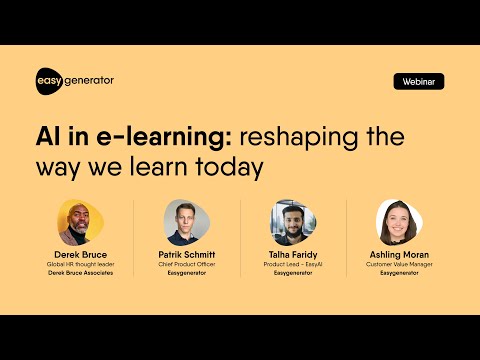
In our latest webinar, Derek Bruce (Global L&D leader), Patrik Schmitt (Chief Product Officer at Easygenerator), and Talha Faridy (Product Lead, EasyAI) joined Ashling Moran from Easygenerator to unpack these questions. The session explored practical adoption, peer learning, trust, and how AI is changing what learning looks like inside organizations.
🎥 Watch the session: Missed it live? Watch the full recording above.
Why AI matters now in L&D
AI is not new. Machine learning has shaped industries like retail, finance, and entertainment for years. Recommendation engines, fraud detection, and predictive systems have been around for more than a decade. But L&D is now catching up.
Patrik explained why AI finally reached learning. Unlike earlier forms of machine learning, generative AI understands and produces language. That matters because language is the foundation of learning. Courses, instructions, coaching, and feedback all rely on language. This shift makes AI practical instead of experimental.
Talha added that AI brings two big advantages to learning teams: content creation speed and personalization. Instead of spending weeks to build training, teams can now generate company-tailored outlines, examples, visuals, and assessments in minutes. At the same time, AI makes it easier to shape training around the learner, not the other way around.
Derek brought in a grounded perspective. He noted that AI is not a revolution, but an evolution. It gives L&D better tools to understand what people need, deliver help faster, and design learning that fits real work. In his view, AI is powerful when it helps people, not when it replaces them.
The speakers agreed on one thing. AI is not only about efficiency. It is also a chance to rethink how knowledge is shared and applied in organizations.
AI creates new potential for peer learning
Peer learning, also known as Employee-generated Learning (EGL), has grown in popularity because it solves a real problem. Subject-matter experts often hold the knowledge people need, but do not have time or instructional design skills to turn that knowledge into training.
Patrik shared that this is where AI adds real value. At Easygenerator, the team saw two challenges when helping customers scale peer learning. First, experts needed a faster way to create content. Second, they needed support to create quality training, not just quick outputs. AI now helps with both. It assists experts with structure, examples, assessments, and clarity while letting them stay in control of the message.
Talha added that AI makes peer learning easier by turning everyday resources into useful training. Experts can now turn a chat thread, meeting notes, or a process checklist into a course in minutes. This lowers the barrier to sharing knowledge.
Derek took the point further. He believes AI will play a bigger role in learning strategy, not just learning production. L&D teams can use AI to connect skills to roles, map development paths, and align learning with business gaps. In his view, the future will combine peer knowledge with intelligent guidance that supports people in real work situations.
What holds AI adoption back
AI adoption is not automatic. Many L&D teams feel excited about the potential but cautious about risks. Derek pointed out that risk aversion from leaders slows AI adoption even when solutions are safe. Some organizations want in-house AI systems even if these tools are basic or slow to develop. Others worry about misinformation, quality, or a lack of control.
Talha noted trust and clarity as major barriers. Many people do not know how AI models work or how data is used. Some fear that AI-generated learning is superficial. Others think AI will take over their jobs. These concerns are common but prevent teams from testing AI in useful ways.
Patrik compared the moment to the early days of cloud computing. People did not trust it at first because it was new. AI faces a similar stage now. The solution, he said, is responsible use. Human review must stay in the loop. L&D should use AI to assist, not automate decisions blindly.
All three speakers agreed that the best way to build trust is through clarity and good practice. That means explaining how AI is used, giving guidelines to authors, and reviewing output before publishing. It also means starting small and learning by doing.
Beyond automation: AI helps build better learning
Much of the hype around AI focuses on speed. But faster training alone does not improve performance. Real value comes when AI helps build better learning, not just more learning.
Patrik highlighted two sides of AI in learning: creation and experience. On the creation side, AI helps authors produce material faster and improve structure. It supports good learning design through templates, feedback, and suggestions. It also lowers production costs for formats like video and roleplay simulations.
On the learning side, AI opens space for richer experiences. AI roleplay allows people to practice conversations in a safe setting. AI coaching gives feedback right away. Adaptive learning adjusts content to match the learner’s experience. These approaches bring active practice back into learning, which helps knowledge stick.
Talha explained that these improvements make peer learning more scalable. Subject-matter experts should not have to choose between speed and quality. With AI, they can create company-tailored training that fits real roles, without needing deep technical skills.
Derek added that AI will support strategic learning decisions as well. It can help L&D teams analyze performance data, find skill gaps, and measure impact. AI gives a clearer link between learning and business outcomes.
The future of learning with AI
The future of learning will include AI, but it will still center around people. The speakers shared a view of what comes next.
Patrik sees two directions. On the author side, AI will help designers and experts curate and update knowledge over time. On the learner side, learning will become more interactive. People will practice more, receive better feedback, and get help at the moment of need.
Talha expects hyper-personalization to grow. Learners will shape their own paths with AI support. L&D roles will evolve to focus on quality, prompting, curation, and guidance. The role of the course author will shift toward knowledge maintenance and design oversight.
Derek is excited about learning in the flow of work. He sees a future where AI copilots support people during real tasks, inside tools they already use. Learning will feel less like a separate event and more like useful support. AI will recommend the right resource during a project or coach a manager during a feedback conversation.
The speakers agreed that AI will not replace L&D. It will raise expectations. Teams will need to move beyond content delivery and focus on performance outcomes.
The bottom line
AI is already part of learning. It saves time, supports peer learning, and improves the learning experience. But success does not come from tools alone. It comes from people who know how to use them with purpose.
For L&D teams, the opportunity is clear. AI can make training faster to produce and easier to adapt. It can connect learning to real work. It can bring internal expertise to the surface. Most of all, it can help people grow in ways that matter for the business.
As Derek said during the session, AI will not replace people in learning. It will help people work smarter. The teams that experiment now will be ready for what comes next.
👏 Huge thanks to Derek Bruce for joining Patrik Schmitt, Talha Faridy, and Ashling Moran for this conversation.
🔗 Learn more about Derek Bruce Associates: https://www.derekbruce-associates.com/
Speakers
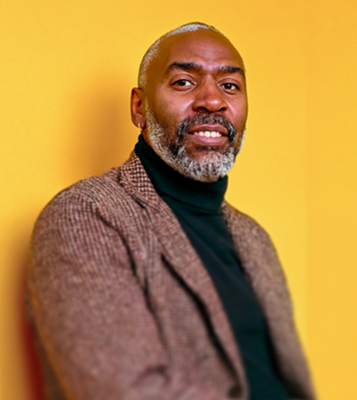
Derek Bruce

Patrik Schmitt

Talha Faridy

Ashling Moran
Speakers Webinar transcript
Ashling: With that being said, I notice the time ticking by so we can go ahead and get started. My name is Ashling and I am a Customer Value Manager here at Easygenerator, and I have the pleasure of hosting today’s call. I’m joined by some very exciting guests. So to get started, perhaps we can ask you to introduce yourselves. Derek, you’re first on my screen, so would you like to go first?
Derek: Yeah, I’m Derek Bruce. Lots of years experience working in L&D and HR development. Currently based in the UK working for a large food retailer.
Ashling: Nice. Thanks, Derek. Talha, you’re next. No pressure.
Talha: Thanks, Ashling. My name is Talha. I’m the Product Lead for EasyAI at Easygenerator, responsible for the AI vision strategy, and look forward to sharing my insights and learning from you all.
Ashling: Okay, and then last but not least, we have Patrik.
Patrik: Yeah, I guess it’s me. So hi everyone. I’m Patrik, the Chief Product Officer here at Easygenerator. Obviously working a lot on these AI products that we’re going to talk about today, and AI more generally. So let’s go.
Ashling: Nice. Thanks everyone for the introductions. I see that the chat is going, but we can certainly go ahead and jump into things. Okay, well today we’re going to be talking about AI in e-learning and how it’s shaping e-learning and how things are going. So we’ll look at kind of what’s happening now, what’s happening in the future, and how we see things evolving — how AI can help us when it comes to learning, how it’s going to reshape the way we learn, but then also the strategies that we have as well.
Ashling: Okay, so the first question. We can start things off with you, Derek. Where do you see AI going? How is it a turning point right now for L&D?
Derek: Yeah, it’s funny because if I look back when I started, I think it’s kind of more of an evolution than a huge turning point. But in a context of how L&D teams know what’s going on, AI has really helped in a discovery phase in terms of analyzing needs, analyzing skills gaps, analyzing and linking to organizations’ needs. And I think from a learner perspective, it’s also helping to make it more personalized, so you can actually spend time doing stuff which you want to do in terms of roleplay scenarios, coaching recommendations. So it’s kind of an evolution of what learning is. But the turning point is probably more what it can do, which I think we’ll touch on later, and day to day it helps things like automation of note taking, that kind of stuff as well. But yeah, there’s a lot of things that it’s doing and helping in the L&D space.
Ashling: I see. Yeah, that makes a lot of sense. And then Talha, I guess yeah, do you have anything to add in that? Do you see AI as a turning point for L&D?
Talha: Absolutely. I think one of the fundamentals where generative AI actually excels is content creation. Even from the very first days of when it became an actual thing — ChatGPT came out. Of course large language models existed before that, but they really became a thing and came to the spotlight when ChatGPT was released. And immediately it meant for the e-learning companies, as we saw, all jumping on the bandwagon, given that it was really, really good at content creation. And not only content creation — actually what made it really, really interesting for the L&D space was the personalization aspect of it, where you could really be flexible with it, ask it questions and tailor content according to your need. And over time it evolved from text going into video, audio, images, and all these things are at the core of content creation. Which makes it of course one of the things that really became the turning point for L&D, I think, and really shaped how people create content — because it brought them speed, so increased their productivity, and also brought them creativity and flexibility in creating content. And yeah, that impacts different things like enabling subject-matter experts and enabling learners to learn better. So yeah, in that regard it is absolutely a turning point.
Ashling: Yeah, I think you’re onto something from my end as well. Even creating content, I can see how generative AI is really changing the game. Patrik, I know you have some experience with this as well, so I’m curious how you see AI bringing language and learning closer together.
Patrik: Yeah, to elaborate on what’s already been said. I think in particular what makes this interesting is that it’s the right technology for the right industry. There’s always these tech trends in the past — like we had blockchain and then people talk about machine learning and it goes on and on and on. But blockchain didn’t benefit us in any way. It had an application in finance in various cases and distributed databases. Same thing with machine learning. These older-school AI approaches were very good for Google if you want to do recommendations like Netflix, or have people click more on ads. But it didn’t help us as L&D people, because we don’t necessarily benefit from these kind of recommendations. But now with large language models, which deals with language — which is a lot about information and how to transfer this information — that is what L&D does and that is also what we do. So it really feels like it’s the right technology for the right industry, which doesn’t apply to everyone. There are also companies that don’t benefit too much from large language models — if you’re a marketplace, for example, then this is not the technology for them. Hence I hope also for everyone on this call that people see this. It is really something that can help us transform, and hence why I think that this particular technology is now an inflection point for this industry.
Ashling: Yeah, 100%. There might be a use for blockchain in e-learning. I haven’t thought of it yet, but maybe somebody might be wondering — yeah, correct us in the comments. And Derek, just to pick up on something that you said. I think it ties nicely in. You see AI as more of an evolution rather than a revolution. And I’d be curious to hear more about how you think AI tools have already changed what we do in learning day to day.
Derek: Yeah. And I think one of the things — and there’s a really great comment in terms of content creation — if I think in my day to day, with teams I worked with previously you would design stuff using PowerPoint, et cetera. One of the beautiful uses of AI is actually you can type in a prompt and help you design content, but there’s still the human-centric piece of it where you can’t just send it out. And I think a lot of you would have seen recently in the news an issue with one of the accounting firms and an Australian council, where accounting was done using AI and it wasn’t accurate. So for me the evolution is: it’s a great tool and it still needs human centricity. But I think the bigger evolution is around understanding what it is people need from a learning team, learning organization, and function. Because if it can help you for discovery — understanding the skills which map to your objectives and goals as an organization, and it kind of sifts through the data, which is one of the things no L&D person likes to do — I’ll be honest, I think that’s one of the nice ways it can be used, to help make sure the teams add real value to their functions, as opposed to being seen as order takers. I think that evolution from being the one to actually create stuff, to actually being one who practically advises what companies need — that’s a good step using AI as well.
Patrik: I actually agree with that as well. So I’ll pick up on that. Because to me, AI is not so much about replacing people. As with most organizations, AI wouldn’t know what’s specific to your company. In fact, I would argue that most of the knowledge in an organization doesn’t even exist in a document. Rather, it’s a question of how can we have people transmit what they know in their head to other people in the organization. Doesn’t matter how smart the AI will become, it still doesn’t know what you want to teach and what you want to teach to other people. So indeed, I think it’s not only a matter of a human verifying the content, it’s probably still to a large degree a human getting this knowledge on paper. Of course AI can help a lot with this, so you don’t have to do too much of the heavy lifting in terms of getting the right block and the right image in the right place with the right pixels. All of that is just like fluff work to facilitate the larger purpose, which is to get the information across. And I think that’s where AI can help. But the human is still the one who actually knows something and wants to do something with it.
Derek: And I think, again I think we’ll be back to facilitate it. But I think the nice thing about it from an L&D space is it does help, as I said, give people access to learning in different perspectives, in different locations, different environments. If we think that a lot of learning historically was face to face, done in a room with flip charts, post-its, pens, cookies, that kind of stuff — AI has taken that and said there’s a much wider opportunity for how people can learn in their own space when they want to learn. It’s 24/7 as well, which is kind of more in keeping with how society is evolving as well. So that just-in-time element, I think is kind of what it’s doing really well as well.
Talha: Yeah, and also just to add very quickly on the technical aspect of it — if you look at the foundation of a large language model, it’s based on probabilities. And just given that fact, it is very likely for the AI to get things wrong, and not have the definite answer you’re looking for. And hence what makes it beautiful is the iterative process that you take with AI to get to the result that you want. So it shouldn’t be taken as a one-shot generation and response silver bullet, but rather something that you iterate with and get to the result that you’re looking for at the end.
Ashling: And I am curious about what you think the biggest misconception you still hear about AI in L&D might be. Derek?
Derek: I think it’s in the chat. I think one of the people have actually already said it — it’s going to take your jobs, it’s going to design stuff, it’s going to deliver stuff. People can access it online, don’t need people to actually do that. And if I look at especially post-pandemic, the most successful learning intervention experiences people have told me they’ve had — whether they’ve been leaders, managers or colleagues — it’s involved people, it’s involved doing something, and it’s involved a combination of people, a combination of AI, and a combination of actually making mistakes in learning. So I think it’s not going to revolutionize the L&D space in terms of getting rid of people. I think it will help people — and the phrase “copilot,” outside of a product, I think is probably the best description of how AI can support learners. Basically it can work with us to make sure we give a better kind of impact to organisations as well.
Ashling: With that in mind about how we can use AI to help us create impact, I’m curious if you have any recommendations on how leaders can become more comfortable experimenting with AI.
Derek: I think one of the things, in terms of leaders especially — and they’re the ones who own the budgets, they’re the ones who allow you to have the software which uses AI to actually bring in to an organization — one of the things I have experienced from work now is actually giving leaders access and saying you’ve got to log on to a number of platforms that use AI. You’ve got to experience things, ranging from Copilot, with bespoke-specific sessions, to sessions with social media and AI specialists coming in talking about the impact of it as well. I think it’s exposure, but also structured exposure. So if I think about it here, we’ve actually got drop-in sessions and scheduled sessions on using Copilot for everything from emails to summarizing documentation, through to data analysis, through to helping write strategies — and that covers all of that. I think you’ve got to give exposure and make it normal and make it accessible and don’t be scared to break it. And I think the higher we get in an organization, I’ve seen for example some of the leaders I’ve worked with don’t even have LinkedIn profiles. If you think that’s the starting point then AI is going to be a huge jump. So it’s actually saying to people: it’s coming, you’ve got to use it, and it’s something which is just normal and you can’t break it — and expose them to it that way.
Ashling: Yeah, I guess: exposure, trying it out, getting your hands on it. I think adding to that, Shivani asked a good question: do we have any examples? And Talha, in your experience, do you have any examples about how AI can be used for learning?
Talha: Yeah, absolutely. One example is myself — a couple of instances where I’ve really found a lot of value in using AI to learn something. I think one great example, one great tool I recommend everyone try, is Google NotebookLM. And one concrete example is me being an AI product lead — sometimes it’s very important for me to keep up with the latest trends and of course there are some very technical papers out there that you want to absorb and get the value out of, but a lot of it sometimes is something that you don’t understand because it’s super technical — you’re not a machine learning engineer. But then you can take those papers, put them into NotebookLM, and then it has a variety of different formats to learn from. So I personally took a paper on trying to make AI more deterministic from a technical angle, uploaded it into NotebookLM, then converted that into a podcast — a conversation in NotebookLM that I just listened to in my commute to the office and back. And that helped me absorb the content ten times better than if I would have read it, and personalized it for my particular proficiency level. And same with vibe coding — I was able to learn from ChatGPT having back-and-forth conversations with it to understand how I can develop some quick prototypes internally. So the personalization aspect I think has really, really helped me learn and consume content that maybe would have been really difficult at the one-size-fits-all approach.
Ashling: Yeah, 100%. I think another example that I come across a little bit, which is actually our own product as well, something we’re experimenting with right now, which is AI roleplaying. So historically doing roleplays is kind of an expensive way of practicing things, and everyone here knows about the value of skill-based learning and practicing what you read about.
Patrik: Hence roleplay is a very valuable way to practice a lot of these soft skills. The question is how do you do that? Maybe you have one trainer, you have a thousand employees. How are you going to roleplay with all these thousand employees? That’s also been something that we’ve been experimenting with — also together with our customers — to build a product where you’re actually roleplaying with an AI, where the AI also has very specific instructions as to how the roleplay should go, what are the constraints that the learner should run into. And you can have realistic roleplays where you also get an evaluation afterwards to see how you did. And then it becomes very personalized. I saw someone posted about personalization as well — this becomes unique for you. You don’t have to read about it, you can practice it and you also get very concrete feedback as to what you can do better. So that’s also an example of what becomes possible with AI now, which wasn’t necessarily possible in the past.
Ashling: I can’t even imagine where it’s going to go from there, how fast it’s all happening. I think, yeah, if we’re thinking about things like speed, I’d be interested Patrik, if you have any tips on how we can spot real value versus shiny features when it comes to AI tools.
Patrik: Yeah, I think someone posted about that as well — that there’s a lot of hype now with AI, and there’s going to be an AI feature in every single tool at some point. And at some point, indeed, we’ve got to see what actually makes sense. And I think that comes back to: is there an underlying problem for this product? There’s a lot of AI products coming out now which look very nice and shiny, but they’re a little bit of a solution looking for a problem. So also for all the practitioners in this room, when it comes to evaluating products and AI features, be very clear about the underlying problem that you have. For example, we have Course Builder in Easygenerator. It’s kind of cool — AI can build the course for you. But why is that even important? The feedback that we hear a lot from customers, and also is a big reason why we’re building it, is that for subject-matter experts — so not L&D people, but people who are expert at their craft but not instructional design — it takes a long time for them to build a course because again, they’re not experts at it and it might not have the right didactical quality. Those are real problems. As long as you can identify that this is a real problem that we have in the organization today, and here is a tool that tackles it and noticeably, materially improves the situation — that, I think, is the main way to distinguish what is flashy and cool versus what actually brings something to the table.
Ashling: It’s really interesting as well that you’ve grounded us in today. I know it’s exciting to talk about the future, but it’s also exciting to look at what’s currently possible. So I’d be curious to follow up on that, Patrik. Beyond automation, what is currently possible with AI in e-learning?
Patrik: Yeah, it’s interesting because you mentioned automation, and I think that was also a previous point. AI in learning right now is very little about automation, which is perhaps different from a self-driving car — that is automation, no human is involved. When it comes to authoring, let’s talk about these separately. There’s the author side and there’s the learner side. On the author side, it’s more about augmentation in my mind. So it’s still the human — like I mentioned in the very beginning, it is the person, the author who knows something and has something they want to communicate to their colleagues. The question is how can we make this more efficient, how can we do the heavy lifting with AI to make it faster and of better quality? So I think that’s one big way — not in terms of how AI is automating things, but how it’s achieving a level of augmentation. Then there’s also a ton of things on the authoring side where things become cheaper to do. AI-generated video would cost you $10,000 to make. Now it costs you $10. And then there’s also the whole learner side. In the past, learning was always static and in a single format. Now with AI, a lot of these things can become very dynamic and personalized, and you can get feedback on what you’re learning. So this goes on and on. I would love to talk about it for the whole hour, but we don’t have that much time. But this is just a small part of why I’m very excited about what we can do with AI, especially now in the coming years.
Ashling: Yeah, so it’s more about augmentation, and I guess that’s already possible. And I guess Derek, on the other hand, you have some hands-on experience with this too. So I’m curious what you see as currently possible with AI and e-learning.
Derek: I think similar things. I think one of the beautiful things is also the mention of videos. And I think it also allows us to bring in a much richer experience for the learner as well. One of the things is we’ve done some learning here where, going back to the pricing side of stuff, we wanted to make the experience very visual, very natural, very human-centric, and we utilized a great tool which allowed the video but also the audio to be generated using AI. And one of the cool things which I didn’t realize it could do was we started the video with just a shot of an individual in a very small background — just a black wallpaper. The AI then allowed us to expand just that starting point into a full blown room and actually just make the whole experience much, much richer, and then move through the house of the individual as we’re going through the learning. So those kinds of things, which weren’t available many years ago, allow the visualization in the e-learning experience to be much richer, much more human-centric, rather than just a typical static image in the background. And also the ability to have really amazing voiceovers and actually have different diverse voices — rather than the same typical voices. And one very small thing but inclusion is a big thing where I work, and having different accents was amazing — being able to do that just using AI as well from a learning perspective.
Ashling: Yeah, it’s really nice. And nice to end with a positive example there. Inclusion matters and I know it’s something we speak about here as well. I don’t want to leave anyone out of the conversation and I’m really interested in this topic. I see that the chat is busy as well. So Talha, anything to add on this point — what’s currently possible with AI and e-learning?
Talha: Currently possible? Yeah, I mean we have of course the automation that we talk about, but then we also talk about the fact that AI is helping reduce the barriers to sharing and consuming knowledge. I think if you look at it purely from subject-matter experts being able to create content — in the past when we didn’t have large language models, when we didn’t have AI, it was a monumental task for someone to create a learning. Like, why would I as a subject-matter expert wake up and decide to create e-learning and share knowledge? What is the motivation? There are so many barriers. I don’t know how to create a good learning experience. But then AI makes it possible for me today to actually get a working e-learning module created within minutes, and then I can verify the output and quickly share it with my peers. So it helps me share knowledge. But then also from a learner perspective, it makes it very easy where you can take that learning and, depending on the tool that you’re using, have the ability to steer that content in the direction that you would like and consume it in a personalized way. So I think this is what’s happening today and we can build upon this for the future as well. Where we look at the concept of hyper-personalization — I think this term is going to blow up in the future. I think this will be the viral term, where it will just be about personalization and how people can get the value out of a base product the way they want to, whether it’s authoring, whether it’s learning or any other application. So yeah, I think this is what’s possible today. And then also AI is opening doors to newer ways of consumption, reaching audiences that wasn’t possible before and scaling it. For example, a very cool thing that we saw internally in one of our hackathons — Patrik organized it — was an application for frontline workers where we were able to use AI to ingest manuals and then create a full simulation experience on how to use a coffee machine from the manual itself. Reaching frontline workers where they are is a pain point, and so it’s enabling us to reach these new target audiences as well.
Ashling: Yeah, so if you heard it here first, Talha’s prediction is that personalization is going to be the next hot topic. But I think that links nicely to a current trend we’re seeing in learning, connected to skills and roles and development. So Derek, from the practical feet-on-the-ground perspective, I’d be curious how you see AI helping L&D connect skills, roles, and career paths.
Derek: Yeah, I mean I think for me it kind of helps a bit from above as well in terms of learning strategy. I think one of the things we’ve used it for here is helping us make sure we kind of have that almost external perspective — does the strategy make sense in terms of looking at the skills and learning the output of roles? So I think that’s kind of one of the key areas where it can really support: in terms of analyzing, in terms of defining but also helping taxonomies from a skills perspective per se. What we’ve actually found is it’s helped us also kind of focus on the right skills. So if I look at previous organizations I’ve worked in, we’ve had taxonomies which have got so many skills you can’t know where to start. And the AI has helped us actually determine which skills, based on the goals, objectives, type of organization, and type of people, are the ones to focus on first, and then second and third, and then actually what learning actually supports that as well. That’s helped in terms of defining, but it’s also helped us define from a skills perspective how to measure whether the learning that’s taking place has actually made an impact as well. So it’s almost like starting with the end in mind, and it’s helped challenge us in the sense of: if you do this, this could be an outcome, and then actually this is an outcome you can measure as well.
Derek: And I think one of the key things — probably many people in the group suffer from this — is L&D leadership development, all those learning spaces are being asked: what’s the return on investment, what’s the impact on the organization? I found when it comes to defining the skills, creating learning which matches the skills, evaluating the learning which matches the skills, AI has helped us on that journey, because it’s helped us actually find the key steps and the key things to do, and also challenged us where we haven’t got enough of a measure to do that. It makes sense that we need a measure, we need to start with the end in mind. There are things that we need to do — we’re making steps in that direction — but progress to be made as well. And yeah, measuring is important, and having a look at what we’re doing and improving.
Ashling: Patrik, do you have any maybe examples that you could share, or ideas on how we can turn AI data into real learning insights?
Patrik: Yeah, depends a little bit on how we define AI or how we define data. So I think partially any information that we want to teach is technically data, and of this we have plenty in organizations — be it the SharePoint or the Notion database or also all the meetings that take place. We’ve been expanding a little bit with those products too, basically having call recordings which you can then upload into AI that can create learning material from this. So of course there’s all of that data and we spoke about that a little bit already. I think the other category of data, which now partially becomes more available, is learner data. Out of all the people who have taken your course — where did they get stuck, which questions did they answer wrong? And also once we start getting a bit more dynamic courses, getting a better understanding of where people have less knowledge and where they have more in certain topics. It’s hard with today’s kind of static courses, but I think once we get these dynamic experiences that Talha spoke of, we’ll get a lot more data on how the learning itself is going, which ties into a little bit what Derek mentioned there in terms of measuring that impact.
Patrik: The holy grail will of course be to measure also what is the impact on the actual work being done. If we can prove that impact, the rest is very easy — you can show that these trainings have improved this or it has reduced error rates, which I’ve seen a few examples of. I think it was one oil company that had a lot of security issues. They collect a lot of this data when there’s a security fault somewhere, when there’s a risk or a hazard — they will write this as a security incident. So they have all of that rich data. And then they did a big push also together with Easygenerator to create trainings on how to bring up safety and security awareness across the organization, how to operate all of this machinery within the oil and gas industry. And they could tangibly see these risk incidents going down. So to try to approach that is of course the holy grail of being able to do it. And also those things become a little bit more doable with AI once you can start measuring at a broader scale.
Ashling: I think that makes sense. And it’ll be exciting to see where it goes. Speaking of where it goes, I am curious to also talk about the future of learning and where AI will play a role, whether it’s peer learning or something else. So perhaps, yeah, Derek, you might like to provide some insight. Where do you see AI having the biggest impact on learning experiences in the next few years?
Derek: Well, I think one — and if it’s kind of my ideal — I’ve been watching a film, years ago, Bruce Willis, and it had lots of agents in the film to the fact that people didn’t actually go outside and used AI agents. I think one of the potential uses of AI can be in a sense of very much learning in the flow of work and actually predicting what you need to know as well. Previously I’ve used Microsoft Teams and they had become a learning section within Microsoft Teams, which kind of prompts you on what you need to do. And I think the next stage is going to be having almost assistants — learning assistants — which are looking at your use of email, your use of output, your use of Excel, PowerPoint, Word, and can also define gaps. Where you have skills gaps, and actually predict what you would need to be doing to actually fill those gaps based on conversations as well. I think that kind of predictive use — and I know if I think about banking, there’s a bank in the Netherlands who are trialing a prediction where you spend too much on a certain item. So for example, over the last four weeks you spent €15 on Starbucks coffee, do you need the next coffee? That kind of concept — not stopping having coffee, but that concept where it predicts where you have a gap, what you could be doing, and actually then takes you to where you’d be learning. I think that’s a really, really cool application of AI if we can get to that point where it’s also applicable and relevant and accurate as well.
Ashling: And it makes sense. So it’s changing how we do things and how we come up with those gaps. Talha, do you see AI changing the role of how learning professionals are working, and their role when it comes to learning?
Talha: Definitely. I think we see the immediate impacts already on how knowledge is being shared and consumed, and I think it’s going to keep growing from here. There are possibly areas that we haven’t even thought of right now on how this technology can completely change the workflows. Even if you look at it from an engineering perspective and coding perspective, the kind of strides that AI has taken in AI-based coding — engineering teams are completely realigning on their strategies and how to incorporate that in their workflows, and how that’s going to decrease the time it takes to ship code, for example. And similarly for learning professionals, how do they evaluate, how do they look at speed for example within the organization in terms of delivering content? How do they look at the problem of overcoming these lengthy backlogs and resource constraints, which are very common in L&D organizations? And how to look at for example instructional design-driven content creation versus subject-matter expert-driven content creation — how does that balance shift? And the potential transition of instructional designers to consultants, for example. We have already spoken to many instructional designers that are looking at their role evolving to consultants as well, where subject-matter experts will now be equipped with the ID knowledge that they didn’t have before, and AI brings that to them and closes that barrier. So all of these changes are happening, and yeah, it’s definitely going to change learning professionals’ roles and evolve completely.
Ashling: Yeah, so I guess you touched on speed here. So it’s going to make processes faster, training faster, and roles are going to change. We see people moving towards a consultancy-type role. Derek, does that align with how you see AI changing the flow of work, or is there anything that you would add there?
Derek: Yeah, I mean I think that’s definitely true. If I look at the teams I’m working with now, the role of what we would call content designers has definitely moved away from just designing content. We’ve been using libraries to help support that. But it’s also moved towards coaching individuals to understand AI. And this is a really strange quirk of where we are now. But when we look at the use of AI, even in HR, some people use it and have this weird feeling of: I’ve used AI to do something, should I be telling people? Because it’s kind of — have I cheated? And I think looking at the roles of L&D people, they need to appreciate that AI is also something which they should be using, can be using, and does make sense. It increases efficiency, it can increase accuracy once it’s checked. But also it gives them space to do other stuff as well. I think the role — a lot of the admin, the stuff which many L&D people don’t want to be doing — it can give that space as well. And I think that’s where we’re kind of needing to just appreciate we should be using it. And one example is there’s also a company called EZRA who do coaching, and they’ve got this great AI coach where it basically just helps individuals improve their performance based on specific needs. One of the things we’ve seen with that particular tool is that it allows you to deploy coaching to many more people, because you can actually use AI and do it over more people. And of course if you’re looking at leaders and managers being able to be coached and actually better developed as leaders, that’s helping organizations get better. And L&D teams help define the coaches and what they do, but it’s been deployed using AI. So for me that is also where the role is — as you mentioned, consulting. It’s also knowing what prompts you use, that’s a big part of how you’re going to be using AI and what works and what doesn’t work. But also I think building trust of others in an organization that AI is awesome and you can use it — because there’s a big thing around: should I be using it? And that’s something I hadn’t anticipated in an organizational landscape.
Ashling: Yeah, I appreciate that. And I also think you spoke to me directly when you said being afraid of using AI. Perhaps I do use AI. I like it. But I have changed my writing style. I don’t use em dashes anymore after seeing a lot of people on LinkedIn saying that only AIs use em dashes. So yeah, I’ve adapted a bit myself. In the chat we also have some nice comments, for example from David, sharing some hints and tips — which is really useful and why I like being live despite the interruptions on my end. But yeah, thanks David. It’s a great example of good learning time: breaking content into clear objectives and bite-sized sections first makes AI tools like Easygenerator much more effective. So there’s things that we can be doing and ways that we can learn, whether we’re acting as a consultant or as a knowledge sharer. Yeah, speaking of knowledge sharers, Patrik, I’m curious if you have any tips or insights on how AI can benefit both teachers and learners.
Patrik: Yeah, I mean in a lot of the ways that we spoke about through the conversation, we have the Easygenerator product where there’s a lot of things happening already. Talha has been working on a new AI product actually, which is launching pretty soon, which is the AI being more involved throughout the work. So some of you might be familiar with the Course Builder already — you basically provide all of your context into the AI and then we produce an entire course about it. In reality though, and very often when working with AI, the first thing that the AI gives you is not perfect. There’s actually a lot of things that need to change. And I just hope that people don’t see that as, oh, the AI failed. Most likely if you would give the same task to a human, the human would also fail because that human wouldn’t know what you’re thinking about. So what’s happening now with this new launch is that we give you a first version, but then the AI is with you and you can say: hey, you got this completely wrong, or you forgot about this section which is talked about in the document, I wanted to create a section on that, or please make these interactive components. So again, it comes back to what I mentioned before about augmentation. I think it’s impossible to automate all of this — there is something very deeply human about learning and development and this field. Because if everything was machine, then what is the purpose of any human? And we’re just not there. So the question is still how can we empower people? I think someone said they’re excited for the launch. I’m super excited for that launch as well once it comes. And that is very much the AI helping you with the heavy lifting. That is not to mention everything that can happen on the learner side — I saw a couple of people talking about a call simulator, essentially roleplaying with AI, and richer learner-side experiences around simulations and adaptive learning and all of those that we spoke about a bit. So yeah, be ready for that one — that’s going to be super exciting.
Ashling: Tools are there. Help people create more content faster at higher quality. Makes sense. Help people create faster. I think I can add in me three — I’m also excited. Yeah, there’s a lot of opportunities, and I think some of this is coming around again to what Talha mentioned. So it’s creating faster, but it’s also creating personalized content or journeys. So I’m curious Talha, if you have anything to add. What’s next in personalization for learning?
Talha: Yeah, I think from a personalization perspective, if you look at the context of learning in our tool, what’s really next — and I think it will be one of the bigger puzzles to solve — is the concept of adaptive learning. I think we talk a lot about it, but there’s a lot of science to it, and to really understand what really works. Because learner preferences are very diverse. Everyone learns differently. And to create a system that really adapts to very specific learner needs — for like Derek or myself or Patrik, all learning differently — and that system being able to adapt to that and show content tailor-made for each person, and be able to score and guide and help them retain it better. I think that is the next thing for personalized learning: cracking the code on adaptive learning. And I think we at Easygenerator are already eyeing that and looking forward to it. So I think that will be the bigger piece on the personalization part at least.
Ashling: Yeah, it’s exciting. A lot of hope for the future for sure. But I guess we’re all here today together at a webinar. So I guess to wrap things up before we take a closer look at some of those questions in the chat. Derek, do you have one piece of advice that you would give to L&D leaders navigating AI?
Derek: I think probably two. But I think one of them is they need to balance reality of what it can do versus what people think it can do versus noise. And I think Patrik’s point around it’s not the great savior, but it is a great way of actually changing things and turning learning to a different perspective. As somebody leading a space, I went to a conference last year where AI was the main topic. I left the conference thinking: but it’s not much different to last year, it’s just moved forward. So we need to temper how we use it and expectations of how we’re going to use it as well. But I do think it is going to be a great turning point, going back to the very first point.
Ashling: Yeah, yeah. And I think that’s nice — there’s something that we can all start looking at and start reflecting on today. We have a little bit of time left, so I do also want to acknowledge everybody in the chat. I know there’s questions coming in. So if you do have thoughts and ideas to share, feel free to pop them there. But Patrik, I see a good question that perhaps you can provide some insight on. And that is: how can we help leaders see the value of investing in AI responsibly?
Patrik: Yeah, very good question. I think the operative word there is responsibly. And what does that mean? This has a lot of different angles to it. One thing about responsible use of AI is that we can’t leak all of our information about the company — in other words, it has to be secure and it has to be safe. I think when the cloud launched 20 years ago, no one trusted that it would be secure. To put your data in the cloud, in the internet — that would be crazy. You have to put it on your own servers. Now, that’s very normal. I think we’re in a similar place now with AI. There’s a bit of a trust issue. And how do you make sure that this is not being trained on? So that is on a very fundamental level which some companies are facing right now in terms of how to use it responsibly and convincing leaders of this. And that of course comes with a lot of contractual work and making sure that this data is secure, handled securely under all of the regulations that exist out there, and we’re not training on it, etc. That is one piece. Then we also have a ton of other questions in terms of just what value will we get out of this. If you want to present this towards leadership or as leaders, it’s that thing we talked about before: what is hype? It’s very easy to spend a lot of money on AI — that is not difficult. But what you actually get in return comes back to what I mentioned earlier. Find those use cases where there’s a real problem that is costing us real money, and then see: can AI help us? In this case, for example in L&D, can it help us speed up course creation or learning capabilities? And there’s a lot of other things around responsibility there, and the ethics of AI and how to do that, so we can go deeper into it. But I think those are some pieces. Again, there are a lot of pillars to responsible use of AI and it will be different for different companies. If anyone is interested in talking more about this, by the way, do reach out to me afterwards on LinkedIn or something — I love this topic overall and we can have a longer discussion on it.
Ashling: Yeah, I’d encourage you. It’s a great opportunity to dive deeper. I know you touched on security and we need to make sure that we’re being secure with the data that we’re feeding the AI. I think that follows up nicely with a question. There’s some curiosity about what’s holding people back. We talked about the future and what we can do already. Talha, maybe, do you have any insight there?
Talha: Yeah, I think trust — when you look at the whole concept of trust, there’s also one thing that is a fear, right? That AI is going to take over my job. That kind of fear, that at the start was becoming more of a barrier for people to adopting AI. But I think now people are gelling into it a bit more, trying it a bit more. I think it goes back to Derek’s point where he mentioned that encouraging people to try a lot of these AI features or AI tools — and the term being “AI proficient” — I think using a lot of these AI tools will help you become AI proficient and help you establish trust with AI as you experiment with it more and more. I think that’s one thing. And then also the skill development. People go on ChatGPT or go on some AI tool and then they start prompting, and oftentimes they would not get the response that they’re looking for. And that’s it — they’ll just go back to their normal, manual workflow. But I think people should invest a lot of time in understanding how prompting works. I think it’s a very critical key skill that one should truly master. And I think it’s a foundational skill. The better you are at prompt engineering, the better you will be across all AI tools — not just Easygenerator, but even ChatGPT or NotebookLM or Claude or Synthesia or HeyGen. It’s a core skill that one should really master. But then there are also other things like data privacy and security. And I think a lot of the responsibility there falls on the shoulders of organizations like ourselves, and not only us, but the providers like OpenAI, for example, to really ensure that the solutions we’re building keep these things at the heart. It’s a hygiene factor — make sure that the data privacy and security aspects are covered so that organizations trust us.
Ashling: Yeah, it makes sense. Trust, and prompting — well, I guess that goes hand in hand. And I can certainly see how it’s evolved. It’s nice to remember that I don’t think AI is going to replace us anytime soon because it doesn’t have all our experiences, contexts, and insights. Derek, there’s another question I see in the chat and I think you might have some unique insight here. And that is: how do we keep human creativity alive while using AI?
Derek: Yeah, I mean it’s a really good question. I had an experience a couple of weeks ago at a team day where we were talking about the use of Copilot. It was used as an activity within a team day for people to use Copilot to create the top five prompts on Copilot and actually then share with the rest of the team in a creative way. So incorporating the use of AI into a team session as an activity, and then using the outcome to share but also to learn — that was a very recent experience I’ve had. But it also kind of showed that it works hand in hand, works in tandem. And I think the creativity piece — we mentioned the prompts, we mentioned the security bit, we mentioned being aware of reality and what it can do versus the noise. But I think just incorporating it and talking about it and actually using it in ways where you’re connecting to people as well and actually doing it outside of yourself. I think there’s always this kind of concern that everybody goes into a little room and they use AI on their own. Why not use it within a team context? Why not use the learning which you get, for example from Easygenerator, and actually do it as part of a team event? That kind of piece around merging and blending the two together makes it still relevant and keeps the human in it as well. And I think the other thing which I see which is beautiful about it is also people sharing what they’ve done wrong on it — the mess-ups and the challenges — and talking about it and actually learning from it collectively. And I think that again helps you actually keep the human element, because you kind of go: well actually so-and-so knew that and it’s helped me improve my use, as opposed to just not even talking about it. So that connection with other people and actually using it as part of your day-to-day I think is really important as well.
Ashling: Hope it makes sense.
Derek: I think it does make sense — to make anything a habit and to make it actionable I think you have to connect it to your day to day. But I might be wrong and if I am, feel free to correct me here in the panel or live in the chat.
Ashling: I see some more questions coming in as well. There is one — let me scroll back up so I don’t miss it — from Kate around: is Easygenerator doing anything or looking into offsetting the environmental impacts of using AI? Talha, would you like to take that one?
Talha: Yeah, I think it’s a very nice question. And I think now with the AI infrastructure expanding, a lot of course falls on the AI providers like OpenAI and Google Gemini because of course they’re in charge of the large data centers. But then also from companies like us, we do try our best to include in our criteria when we’re selecting these providers that they are doing something on that — similarly to bias, for example, or ethical standards. So this is very important, and we should also consider this in our criteria for onboarding AI providers. But there’s a lot more work to be done on this side, and when we say more work, a lot of it is around awareness. Not many people are aware of this actually being a problem. So one is to spread the awareness around this, and then also take actionable steps to increase the evaluation on that side.
Patrik: Yeah, I think also on this one, it’s a very interesting question. Just quickly to dig into this one too, which is the selection of the model. As many of you know, there’s a lot of different models out there. Some are very expensive, some are very cheap. China, about a year ago, came out with a new model called Deepseek, which was something like 10 to 30 times cheaper than the other models. It’s not about the money. What the money represents is how much compute went into calculating this answer. And the more efficiently you can do this, the less electricity you need and the less water it consumes, etc. And here we’re on this kind of Moore’s Law curve, but a different curve in the sense that we have models which are becoming more capable every month, every year, but they’re also becoming cheaper to operate. Our human brain, for example, consumes about 20 watts of energy. And that is kind of the long-run ideal — should it be possible to operate and compute things as cheaply as what nature has created with our brain? And I guess the answer is yes. There’s a lot of innovation that is still to happen there. And when you look at these curves in the amount of compute, the amount of energy that it takes to process one token — it’s really dropping fast over time. So I think one of the main things that we have to do as Easygenerator is really be on the hook there as well and make sure that we follow the trends in terms of having the best models available and the cheapest ones — not for the sake of the money alone, but because it represents something behind the money, which is really the environmental impact. Because it’s super important. If we continue at this rate going forward, just a couple of years will have huge data centers doing nothing but computing AI. The reality is that this doesn’t scale linearly and it has never done so with a lot of these technology topics. We have this decrease — it’s what happened with electric cars. We could never produce electric cars if we still had the same battery as we did back in the day. The environmental impact would be disastrous, but we sort of grow out of that also. That’s not a reason to ignore the environmental impact that we have today. But we’ve got to stay on top of it. So it’s a very valid question.
Ashling: I agree. And I think — is it also, and this is more of a question because I’m not as tech as you guys — is it also a matter of making sure people aren’t using so many prompts in the first place? Because if you’re using 100 versus 10, that’s having a knock-on effect. And if a package is so advanced it makes it easy to actually get what you want from the first two or three prompts, it then uses less energy. Is that a common-sense comment or completely off the cuff?
Talha: I think, just to weigh in on that — I think responsibility of ensuring that the environment is not impacted negatively rests on the shoulders of providers down to the users as well. So this could absolutely be one of the ways that one contributes towards ensuring that the environmental impact is as minimal as possible. When you learn prompting as a skill and you get proficient at it, you will learn that you don’t need 100 prompts to get to your desired output. You can definitely reduce that. So this could be one of the things — at an end user level, for someone thinking how can I contribute — this could potentially be one of those things. Get proficient at prompting and use fewer tokens. Absolutely.
Ashling: And I notice we just have a few minutes left. I found that interesting — I never thought of comparing my usage to what my brain uses. So I’ve learned a few things here as well. But I do see a question that I think is interesting. Maybe you can jump in on this, Patrik. Can you summarize which EG features currently allow us to personalize the experience for different learners?
Patrik: Yeah, so I think there’s a lot of things that we’re working on in an experimentation phase, because this is also a new thing for Easygenerator. To what degree do we want to have very custom experiences on the learner side? Historically Easygenerator has been about creating courses which are kind of static. I mentioned one already, which is the notion of roleplaying, which is kind of personalization in the sense that you’re adapting the whole experience to what the learner is doing. Another couple of pieces that I’m also looking at together with Talha is the idea of adaptive learning and branching — basically coming to a conclusion of: you know this topic already, but you don’t know too much about this yet. So there’s a lot of things we still have in the plans. For the time being, it’s quite experimental. So a long way to go when it comes to adaptive learning, branching, and using AI with this. A key thing for us is that we want to make sure that it’s done right. For a lot of customers that we talk to, they want to know what does a learner see, what is the learning experience, what will they be taught. So when we played around very early on with AI experiences that were highly dynamic, it was a little bit random in terms of what the learners saw. The AI concluded that you already know this, but then the author was like, well they didn’t really. So you lost a lot. And as an author, as an L&D professional, you could never really know: does the learner get this information, yes or no? So this is a question that we want to make sure we really get right before we just put some AI adaptive learning out there. It comes back to what we talked about earlier — fancy and flashy features versus ones that actually solve an underlying problem. And the main thing that we have to solve for there is to make sure that when people use these adaptive experiences, we really know that they picked up on all the learning objectives in the correct manner, and that we can certify that that was the case. So there’s some more development for us to do to have those purely adaptive, personalized experiences. Goes for the rest of the industry too. So we have some early takes on it, but we have a longer way to go, that’s for sure.
Ashling: I’m not sure if Derek or Talha have anything to add to that. And we’re also on time. I am conscious of the time. And there is one last question that I would love to get your input on, Derek. And that is: if you had to name one AI trend that will truly shape learning in the next five years, what would that be?
Derek: I think I don’t know if it will shape, but I hope it does. I think the ability to apply agentic AI with ethics — and I say that in a sense that a lot of the stuff we do from a learning perspective, whether it’s coaching or giving us feedback or problem-solving, we don’t have the ability for the AI to easily have the ethical element inside of it. And I think if you’re thinking about human centricity, you’re thinking about working with AI as opposed to against it. If there’s a trend where we can truly crack where the ethical part of the design comes through — if you think about coaching, leadership, or those kinds of learning interventions — I think that will be a big step forward as well.
Ashling: Yeah, well, thank you for that. I am conscious of the time. I’m glad to see we still have some of you here in the chat with us. So yeah, to wrap things up, thank you very much Derek, Talha, and Patrik for joining today.
Transcript produced from VEED subtitles. Speaker attribution assigned based on context and role.