


L&D in motion: what changed in 2025, and what’s coming in 2026
AI reshaped skills, expectations, and learning in 2025. In our latest webinar, we talked about what mattered most, and what L&D can do to prepare for 2026.
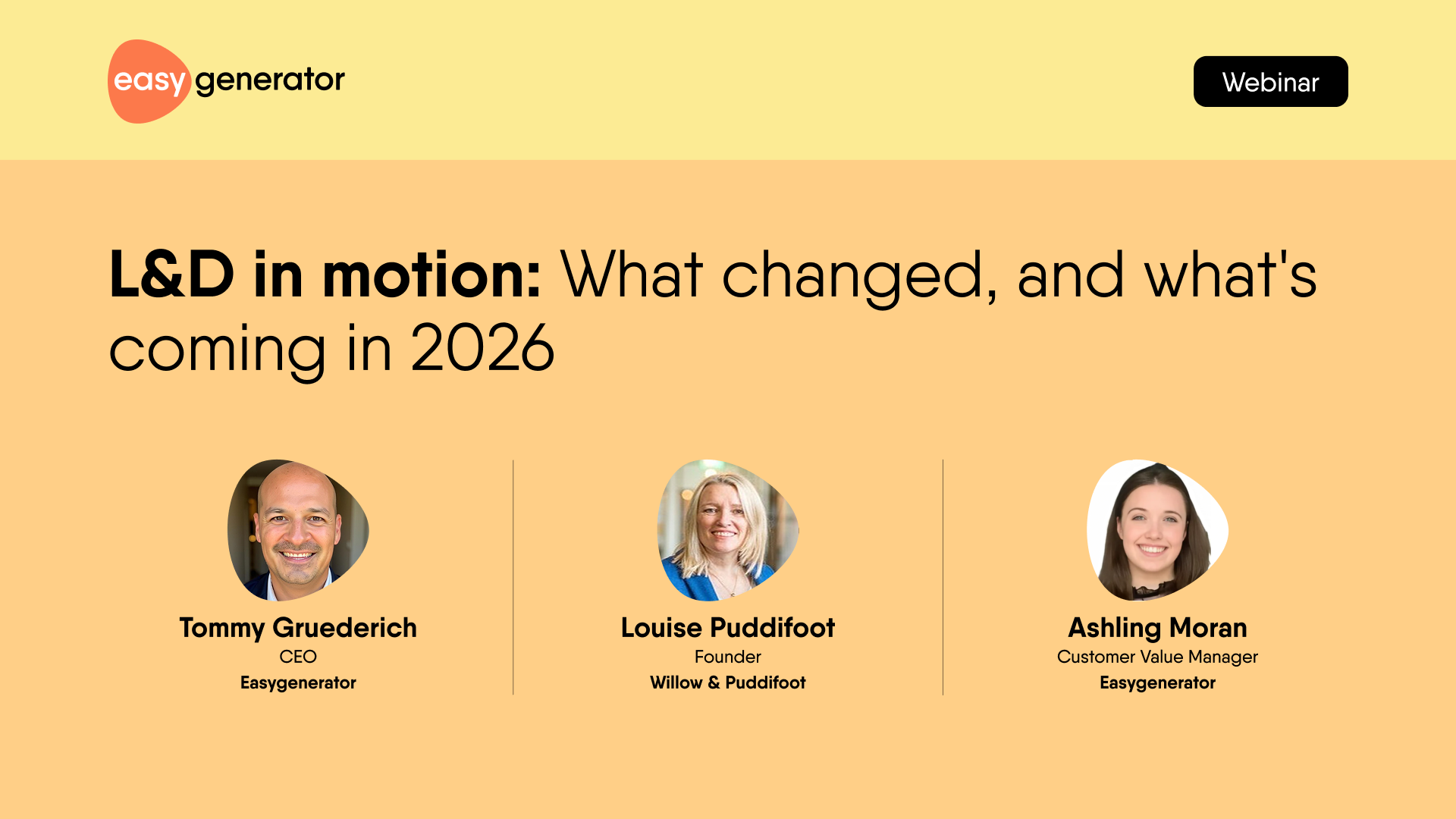

Workplace learning changed a lot in 2025. AI shaped day-to-day work, learner expectations evolved fast, and teams had to rethink how they build skills. In this webinar, we looked at what shifted in 2025 and what these changes mean for learning in 2026.
In our latest webinar, Tommy Gruederich, CEO of Easygenerator, and Louise Puddifoot, Founder of Willow & Puddifoot, joined Ashling Moran, Customer Value Manager at Easygenerator, to discuss these shifts. They shared clear examples from their work with teams across industries and described how learning not only supports performance and growth now, but confidence as well.
🎥 Watch the session: Missed it live? Watch the full recording below.

Why 2025 felt like a year of reinvention
Many teams faced new skill needs in 2025. They also worked with fewer hiring options. Tommy shared that companies struggled to bring in new talent, so many of them focused on reskilling and upskilling their own people. AI took over repetitive tasks and created more space for work that needs judgment and communication. That shift made learning feel more strategic. Teams needed skills that support business goals, not only skills that complete a course.
Louise shared what she saw in her leadership work. Managers faced new pressure because AI changed how work gets done. Teams needed basic AI literacy, but they also needed human skills like adaptability, critical thinking, and systems thinking. Managers had to help their teams handle uncertainty. They had to rethink workflows and set new expectations. Louise also shared that the relationship between people and AI shaped how work felt in 2025. Humans now guide the work while AI supports it.
Both speakers agreed that reinvention became normal.
How learner expectations changed
Learners expect speed, they expect clarity, and they expect content that feels like a fit for their goals. Tommy noted that younger workers don’t want long courses. They want short and interactive content. They want to watch or try something, not read heavy text. He explained that relevance drives attention. If learning doesn’t feel useful, learners disengage. He described this as silent quitting from learning.
Louise added that AI co pilots help early-career employees learn much faster. Many entry-level tasks are now automated, which means that organizations expect new starters to reach confidence sooner. L&D now blends performance support with deeper development programs. Learners need quick answers during work, but they also need time for reflection and practice.
Soft skills matter more because AI shapes how work gets done. Louise shared examples from her CRAFT leadership framework. Communication, resilience, authenticity, future focus, and transformation help teams adapt. Learners in inter-generational teams need tolerance and curiosity, and they also need support when work feels overwhelming.
Tommy explained that skills now act as a new currency. Credentials matter less, learners want progress that feels visible, and teams need new learning experiences and new tools to meet these expectations.
What 2026 will bring for learning
Louise described a future where teams combine human strengths with AI support. AI will take on more execution work, and humans will focus on strategy, design, thinking, and coaching. This requires new skills in L&D, as teams will have to direct learning systems instead of building everything themselves. They will guide AI agents and use them to create more personalized and adaptive experiences.
Adaptive learning will become more common. Learners will receive tailored guidance, practice opportunities, and feedback based on their current skills. Louise believes culture will shape success, as managers will have to model new behaviors and encourage continuous learning.
Tommy shared that learning in 2026 will feel interactive and personal. He referenced one of McKinsey’s research that showed a 30% to 40% rise in engagement when teams use AI personalization. He expects learning formats to expand. Podcasts, short simulations, scenarios, videos, and real-life walkthroughs will sit side-by-side. Text-only formats will no longer meet learner expectations.
Tommy also explained that future learning will feel closer to coaching. AI coaches will provide support at any time, where learners practice soft skills through conversations with AI. These experiences help learners try new approaches in a safe way. Tommy also noted that AI tools won’t replace us. They will support us and make more space for deeper work.
The bottom line
L&D played a key role in 2025. Talent shortages and AI adoption pushed teams to rethink how they support learning. Learners wanted shorter and more interactive content, managers needed new skills to guide their teams, and learning ideas from social platforms shaped expectations at work.
In 2026, learning will feel more adaptive and more personal. Teams will have to blend human insight with AI support. L&D will also guide learning systems and shape how organizations grow. The focus will stay on real progress and real experience, not only on courses.
👏 Huge thanks to Louise Puddifoot for joining this conversation.
🔗 Learn more about Willow & Puddifoot here: https://www.willowandpuddifoot.com/

Related articles

Rares Bratucu
How to create product training for sales teams
Create product training for sales teams with AI

Rares Bratucu
How to create customer success training
Create sales enablement training with AI and scenarios

Rares Bratucu
Top e-learning video production software in 2026
Top e-learning video production tools compared
It's easy to get started
-
 14 day trial with access to all features. Start with variety of course templates.
 -
Get unlimited design inspirations. Level up your courses.
-
Upload your PowerPoint presentations. Get instant courses created.
